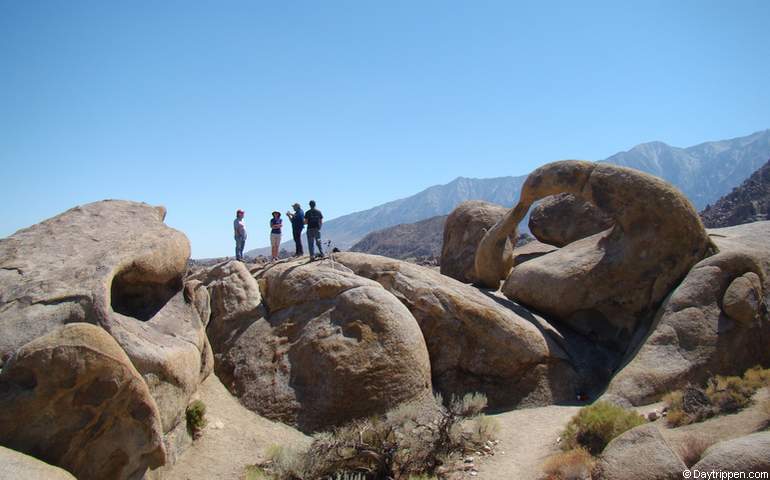
The Alabama Hills National Scenic Area, located just west of Lone Pine, California, is a stunning destination known for its unique rock formations, desert landscapes, and dramatic backdrop of the Sierra Nevada mountains, including Mount Whitney. The Alabama Hills offers a mix of outdoor activities, cinematic history, and breathtaking scenery, making it a must-visit for travelers driving along Highway 395 through the Owens Valley. Here’s a guide to help you plan your visit to one of California’s most delightful outdoor destinations.
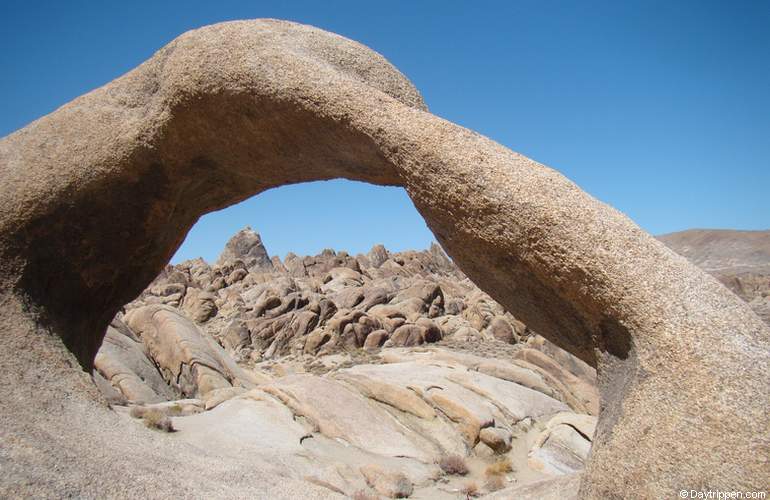
Exploring Alabama Hills Natural Arches:
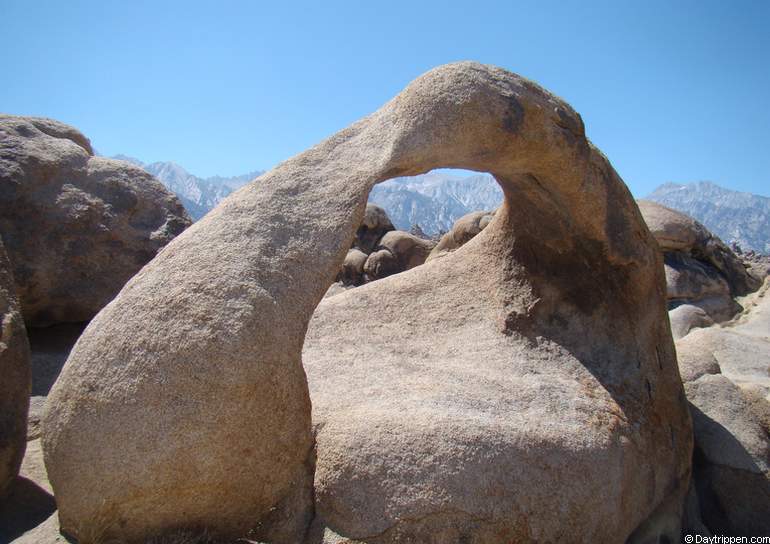
Mobius Arch: A 0.6-mile, easy loop trail leads to the iconic Mobius Arch, which frames Mount Whitney perfectly for photos. The trailhead is on Movie Flat Road, with a dirt parking lot. Also nearby is Lathe Arch, a smaller, ground-level arch with Sierra views. The Mobius Arch’s smooth, fluid contours form an oval that perfectly frames Mount Whitney in the background, making it the most photogenic of the Alabama Hills’ arches.
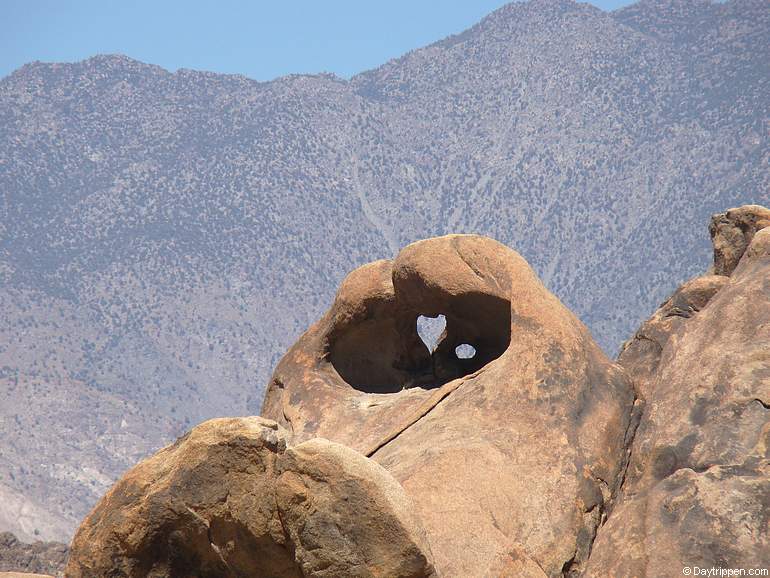
Heart Arch: This is a 0.4-mile round-trip hike starting from the Mobius Arch trailhead (take the right fork at the trail split). The heart-shaped arch provides unique photo opportunities. Heart Arch can also be viewed from the parking area of the Mobius Arch trail. While it is possible to hike to Heart Arch, keep in mind that the closer you get, the less it resembles a heart.
Boot Arch and Whitney Portal Arch: Accessible via short hikes off Movie Flat Road or Whitney Portal Road, these arches offer scenic views and are less crowded.
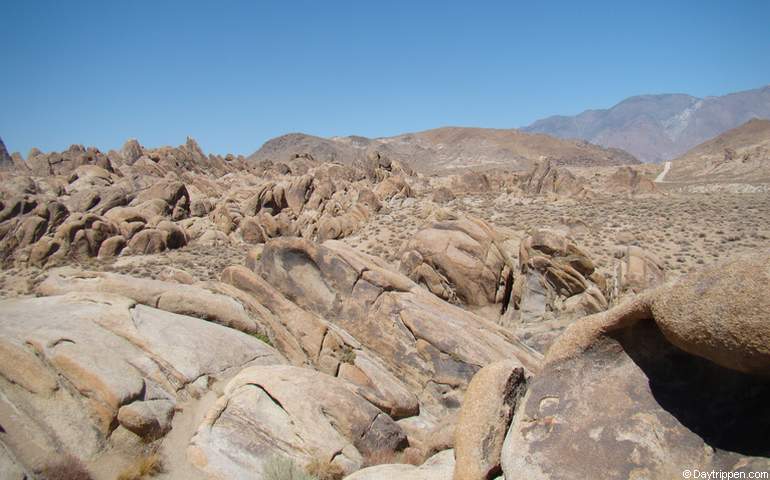
Alabama Hills Scenic Drives
Movie Road Tour and Film History: This graded dirt road provides expansive views of rock formations and the Sierra Nevada. You can explore several filming locations, including Lone Ranger Canyon, Gunga Din Canyon, and Roy Rogers Movie Flats. Be sure to pick up a Movie Road Touring Brochure at the Museum of Western Film History in Lone Pine. This tour is a must-do for its cinematic atmosphere and excellent photo opportunities.
Unpaved Roads: Explore unmarked dirt roads branching off Whitney Portal Road for quieter routes and hidden arches. High-clearance vehicles are recommended for rougher paths. Ask for route suggestions at the Eastern Sierra Visitor Center, as it’s easy to get disoriented. Practice Leave No Trace principles to preserve vegetation.
Popular Outdoor Activities
Rock Climbing: This destination features breathtaking rock formations and stunning mountains. The quality of the granite is excellent, the weather is remarkable, and most climbs are no taller than 100 feet, making it an enjoyable spot for both beginner and expert climbers. Some of the most popular climbing sites include Whitney Cave, Cattle Pocket, Alabama Dome, Dinosaur Cracks, Pillar of Toth, and Poodle Wall.
Stargazing: The remote location and low light pollution make the Alabama Hills ideal for stargazing. The Milky Way is visible on clear nights, especially during a new moon. Bring a telescope or enjoy with the naked eye from your campsite. Tips: Check moon phases for optimal star visibility. Dress warmly, as nights can be cold year-round.
Mountain Biking: Try the Alabama Hills Loop (14.7 miles, challenging climb followed by a single-track descent through boulder fields).
Camping in The Alabama Hills
Dispersed Camping: Free with a required Alabama Hills camping permit (available online, at the Eastern Sierra Visitor Center, or from BLM rangers on-site). Camp only at designated sites marked with a tent symbol. Sites are first-come, first-served, with a 14-day limit.
Nearby Campgrounds: Tuttle Creek Campground (BLM, 5 miles from Alabama Hills): 83 RV/tent sites, fire pits, picnic tables, potable water (seasonal), and a dump station. No hookups.
Lone Pine Campground (Inyo National Forest): Offers basic amenities, close to the Mount Whitney trailhead.
Camping Tips: Bring all supplies (water, food, trash bags), as there are no services in the Alabama Hills. Six porta-potties are available for waste management. Pack out all trash, including human waste, if no facilities are nearby. Campfires require a free California fire permit (available at permit.preventwildfiresca.org). Dog-friendly, so bring your furry friend.
Alabama Hills History
The Alabama Hills got their name from prospectors living and mining in the area during the Civil War. When news reached California about the Confederates’ warship’s victories, the CSS Alabama miners supporting the South named their claims in the ship’s honor. Even though Union forces sank the boat in 1864, the name “Alabama Hills” stuck. On May 24, 1969, the US Bureau of Land Management (BLM) designated 30,000 acres west of Lone Pine, California, as the “Alabama Hills Recreation Area.”
Getting to the Alabama Hills
Location: West of Lone Pine, Inyo County, California, at the base of the eastern Sierra Nevada, about 3 hours from Los Angeles, 4 hours from Las Vegas, and 7 hours from San Francisco.
Access: Free to enter, no fees or gates, open year-round, with dirt roads accessible by most vehicles (high-clearance or 4WD recommended for remote areas). For more details, visit the Eastern Sierra Visitor Center or the Visit Mono County website.
Nearby Attractions & Points of Interest
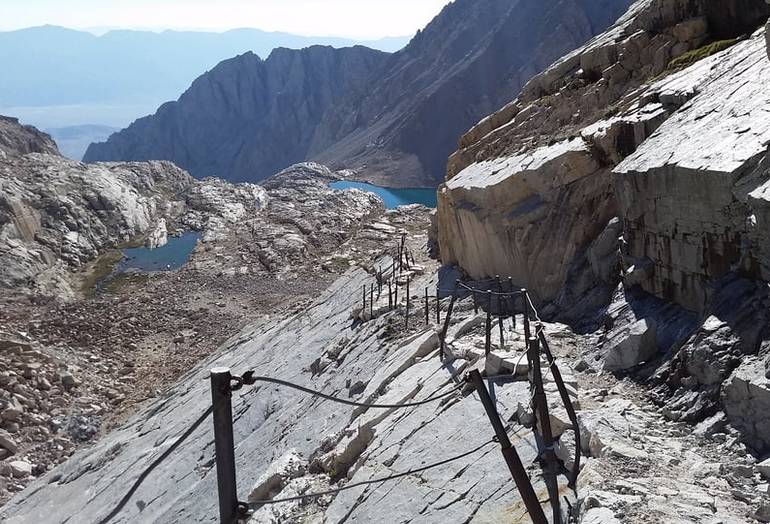
Mount Whitney Trail: The 22-mile round-trip hike makes for a grueling day hike, but it is well worth it for those eager to claim bragging rights on climbing the tallest mountain in the continental United States. With much of the trail at an elevation of 13,600 feet, it is not a hike to be taken lightly, despite being trendy.
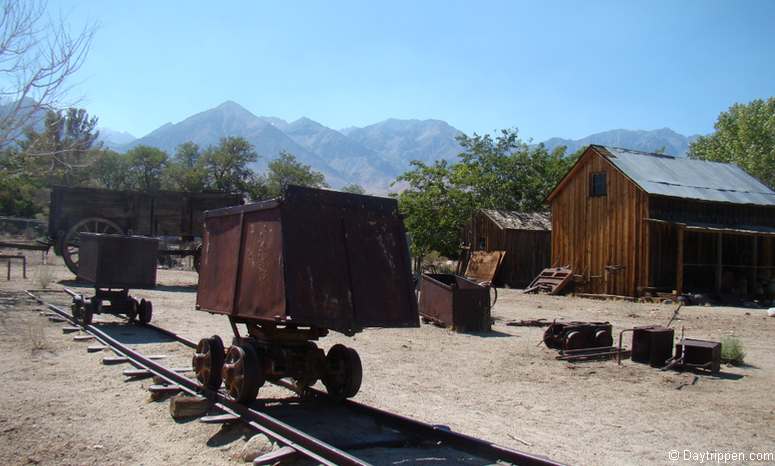
The Eastern California Museum, located in Independence, California, is about 15 miles north of Lone Pine and the Alabama Hills. The Museum is one of the few places where you can view pictures of Owens Dry Lake when it still had water. At one time, the lake covered 100 square miles and was over fifty feet at its deepest point. Outside the Eastern California Museum, visitors will delight in walking through Little Pine Village.
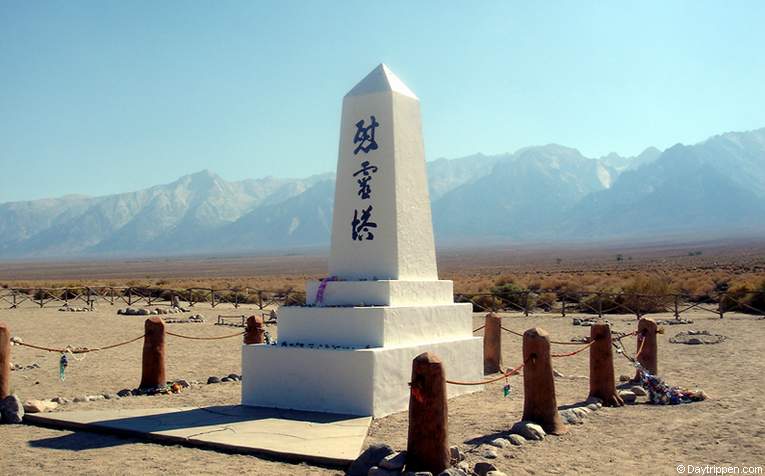
Manzanar National Historic Site (10 miles north): The Manzanar National Historic Site, located 15 miles from the Alabama Hills, is a poignant historical site preserving the memory of one of ten WWII Japanese-American internment camps. Driving Tour (3.2-mile loop) accessible by car or foot, visits key sites, including: reconstructed barracks, a replica guard tower, and Cemetery and Monument: The iconic white obelisk, inscribed with “Soul Consoling Tower,” marks a cemetery where internees were buried.