- 41
- 63shares
Exploring Aztec Ruins National Monument, New Mexico
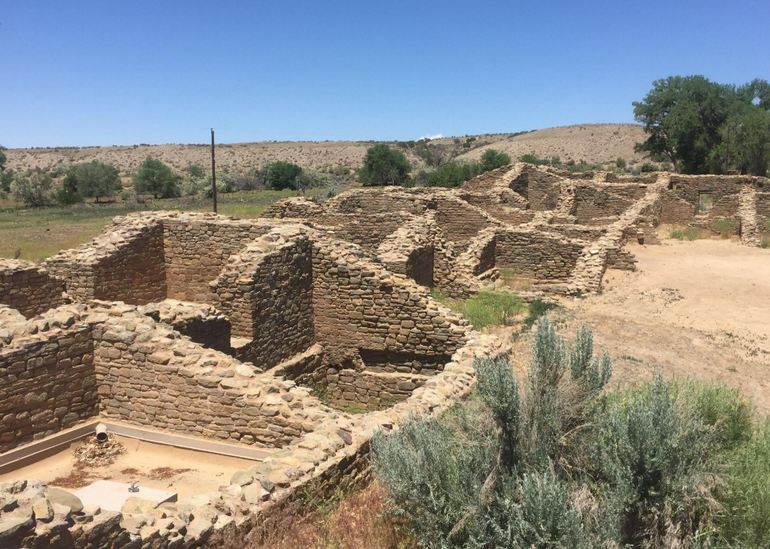
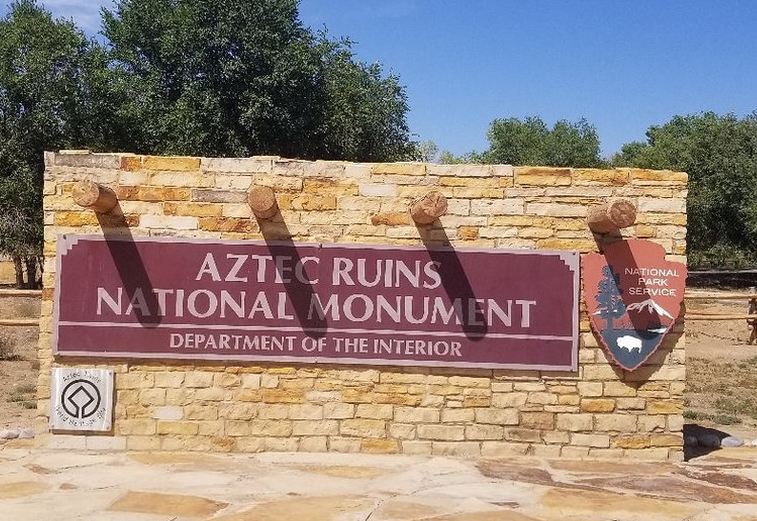
Aztec Ruins National Monument sits on the north bank of the Animas River in Aztec, New Mexico. It protects one of the largest and best-preserved Ancestral Pueblo great-house communities outside Chaco Canyon. Visitors can walk through original rooms, study stone masonry that still holds 900-year-old wooden roofs, and enter the largest reconstructed Great Kiva in the Southwest.
The name is a 19th-century mistake. Early settlers assumed the Aztec Empire of central Mexico built the massive stone buildings. They were not. Ancestral Pueblo people planned and built this settlement in the 1100s, lived here for about two centuries, and left by the late 1200s. Today the monument covers about 318 acres, was established in 1923, and is part of the UNESCO Chaco Culture World Heritage Site. Admission is free, the self-guided walk is short, and the site is an easy add-on to a Farmington, Durango, or Mesa Verde itinerary.
Start at the Visitor Center
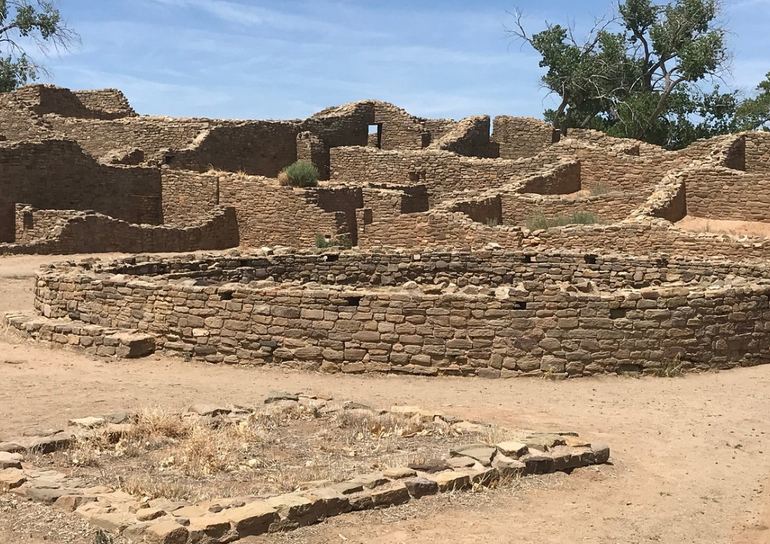
Begin inside the visitor center, once the home of archaeologist Earl Morris, who excavated much of West Ruin in the early 1900s. Pick up a trail guide, talk with staff, and spend time in the small museum. Pottery, jewelry, and other objects recovered from the rooms give a close look at daily life, trade, and craftsmanship.
A 15-minute film, Aztec Ruins: Footprints of the Past, plays on the hour and half hour. Pueblo scholars, Navajo voices, and archaeologists share different ways of understanding the place. The Western National Parks Association bookstore sells books, postcards, and traditional crafts. The visitor center is open 9:00 a.m. to 5:00 p.m. daily except Thanksgiving, Christmas, and New Year’s Day. Photos are allowed; skip flash photography around the exhibits.
Walk the West Ruin Trail
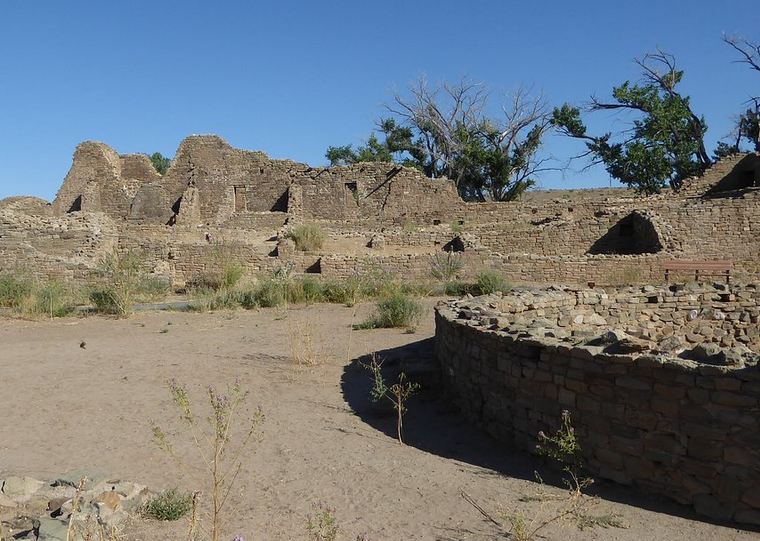
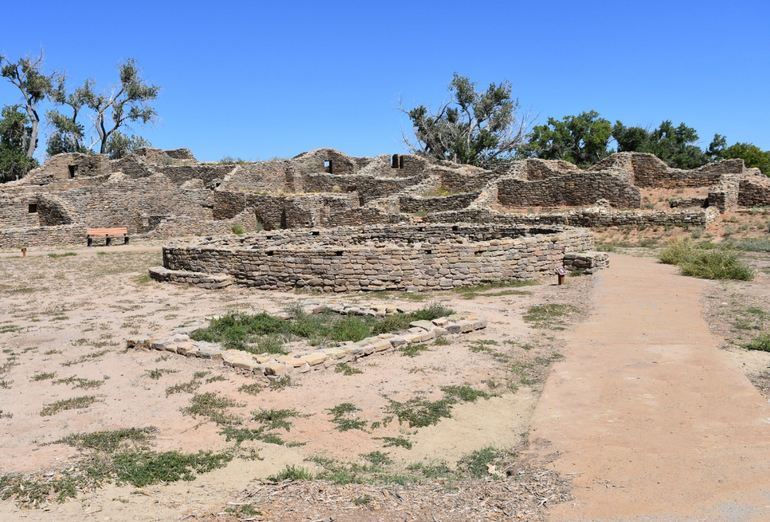
The main visitor route is the Aztec West self-guided trail, about a half mile. Stay on designated paths and do not climb the walls. The walk follows an 800-year-old alignment into the great house that once served as a political, economic, and ceremonial center after Chaco’s influence faded.
West Ruin is the largest known great house outside Chaco Canyon. Construction began around 1100, and most of the building rose in only a few decades, with the core finished by about 1130. The structure once held roughly 400 interconnected rooms, many two or three stories high. Some walls still rise about 30 feet. Core-and-veneer masonry, large rooms, a formal plaza, and multiple kivas follow Chacoan design. Yet, the work here was faster and more concentrated than the centuries-long building at Pueblo Bonito.
Inside several rooms, you can still see original ceiling beams of pine, spruce, fir, and aspen. Those timbers were cut in distant mountains and carried here without wheels or draft animals. That fact alone makes the engineering easier to respect. Later residents remodeled rooms and added kivas as the community shifted through the 1200s. Building stopped in the late thirteenth century, and people left the valley around 1300, part of a wider movement across the northern Southwest.
Step Inside the Reconstructed Great Kiva
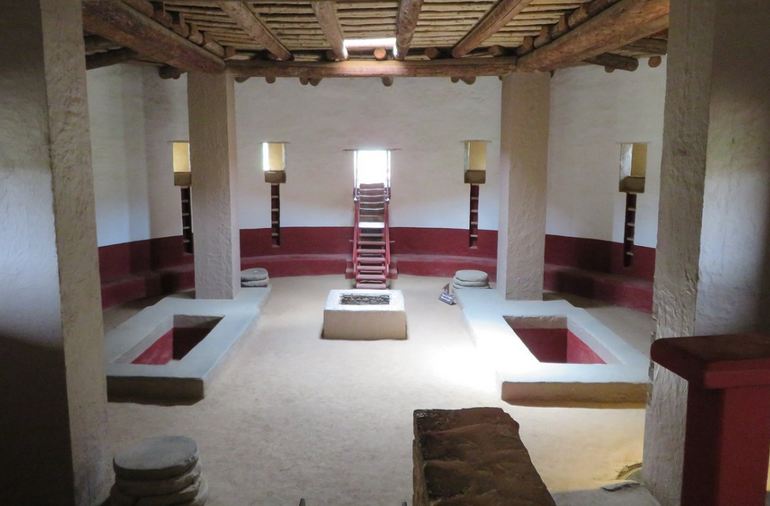
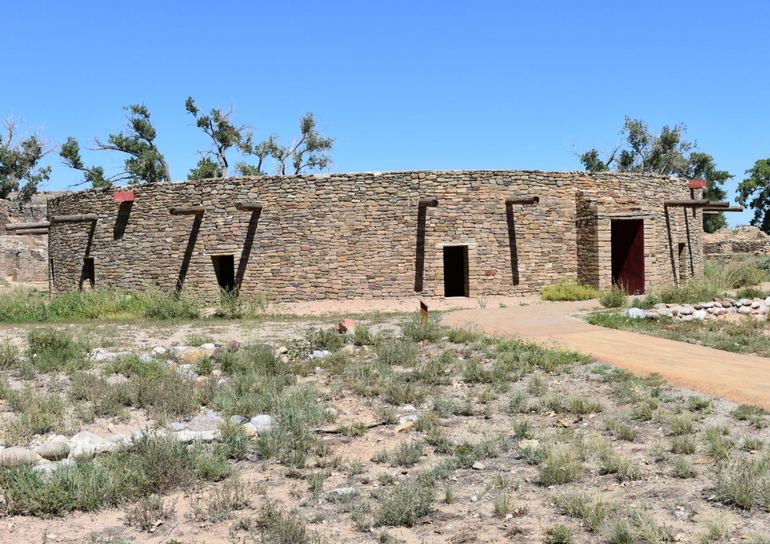
In the West Ruin plaza stands the reconstructed Great Kiva, the feature most visitors remember. This circular, semi-subterranean ceremonial chamber is about 48 feet across and has an outer ring of rooms. Earl Morris excavated it in the 1920s and rebuilt it in 1933–34. It remains the oldest and largest reconstructed building of its kind in the Southwest.
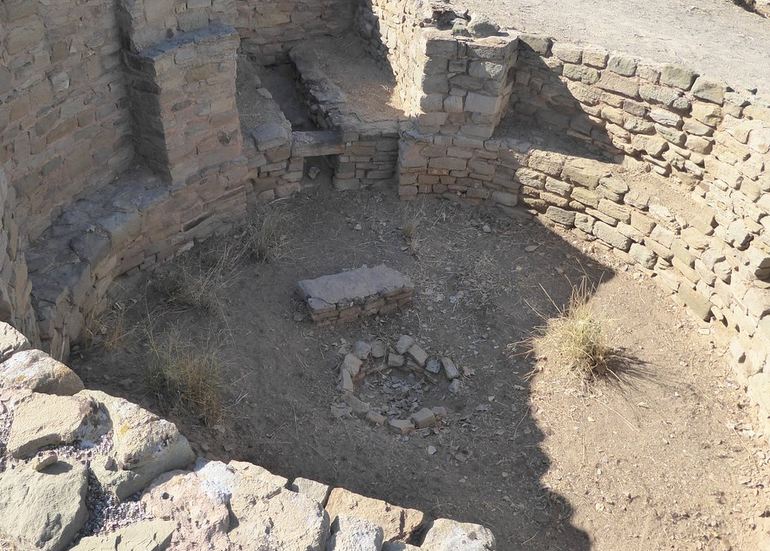
The interior has a bench, wall niches, and a formal north–south layout similar to great kivas at Chaco. Standing inside gives a sense of scale that photographs cannot. Many Pueblo communities still regard this as a living ceremonial space. Enter quietly, follow posted guidance, and treat it as more than a photo stop.
Heritage Garden and Native Plants Walk
After the ruins, walk through the Heritage Garden in the picnic area. Staff and volunteers grow traditional crops such as corn, beans, squash, sunflowers, and gourds. Guided garden walks are offered in summer when staffing allows.
The short Native Plants Walk, on the west side of the picnic area near the parking lot, points out grasses, shrubs, succulents, and trees that people in this region have used for food, medicine, dye, and construction for centuries. It is an easy add-on if you want more context without another long hike.
Picnic Along the Animas River
Cottonwoods shade the picnic area. Tables, shelters, and grills (when fire conditions allow) make it a good lunch stop. Leashed dogs are allowed here. A paved path leads toward the river.
From the picnic area, you can follow the Old Spanish National Historic Trail over a pedestrian bridge across the Animas. The walk to the river is about half a mile; historic downtown Aztec is about 1.5 miles. One stretch is unpaved and can be muddy after rain. Downtown Aztec’s Main Avenue is a historic district with the Aztec Museum & Pioneer Village if you want a second stop in town.
Ranger Programs and Seasonal Events
From May through September, rangers typically offer short interpretive talks around 10:00 a.m. and 11:30 a.m., often in the Great Kiva. These are not full guided tours of West Ruin. Topics change and may include engineering, plants, geology, or bats. Confirm times at the front desk.
Special programs can include East Ruin tours, cultural lectures, ethnobotanical walks, workshops, dance performances, and the Indigenous Cultural Arts Festival. Dates go up on the official calendar about a month ahead.
Planning Your Visit: Hours, Fees, and Directions
The grounds, trails, picnic area, and restrooms are open 7:00 a.m. to 5:00 p.m. The visitor center is open 9:00 a.m. to 5:00 p.m. The monument is closed on Thanksgiving, Christmas, and New Year’s Day. No after-hours access is available unless a scheduled program is underway. Do not leave vehicles in the lot after closing.
Admission is free. No entrance pass is required. Staff can issue certain free Interagency passes (Military, Access, and 4th Grade/Every Kid Outdoors) if you bring the required paperwork. Annual and senior passes can be purchased at the BLM office in Farmington and Mesa Verde National Park.
Address: 725 Ruins Road, Aztec, NM 87410 – Phone: 505-334-6174
The site is in Aztec, not Farmington, though Farmington is the larger nearby city. From U.S. 550, follow signs onto Ruins Road. The site has oversized parking for RVs and buses. Groups should call ahead so staff can plan for arrival and any accessibility needs.
Stay on trails, leave artifacts in place, and remember this is a sacred landscape for many Indigenous people of the Southwest.
Nearby Stops: Farmington, Durango, and Mesa Verde
Farmington works well as a base, with motels, RV parks, and campgrounds. Durango, Colorado, is about 45 miles north. Four Corners Monument is roughly 30 miles southeast of Farmington. Mesa Verde National Park is about a two-hour drive. Chaco Culture National Historical Park, the architectural parent of this great house, is a longer, more remote day trip south and is worth combining if you have extra time and a suitable vehicle.
Aztec itself is small enough that you can see the ruins, walk to the river, and still have an afternoon in town.
Aztec Ruins NP Frequently Asked Questions
Is Aztec Ruins National Monument free?
Yes. There is no entrance fee.
Did the Aztecs build these ruins?
No. Ancestral Pueblo people built them in the 12th century. Early settlers gave the site a misleading name.
How long do you need?
Most visitors spend 1 to 2 hours at the visitor center, West Ruin Trail, and Great Kiva. Add time for a picnic, the plant walk, or the trail into town.
Are the ruins accessible?
The visitor center and portions of the picnic area have accessible routes. The West Ruin trail includes uneven surfaces and some tight rooms. Call 505-334-6174 for current conditions.
Can you go inside the Great Kiva?
Yes, during open hours. Follow posted rules and treat the space with respect.
Are pets allowed?
Leashed dogs are allowed in the picnic area. They are not allowed on the ruins trail or in the visitor center, except for service animals.
When is the best time to visit?
Spring and fall are comfortable. Summer brings ranger talks and special events but also heat. Winter hours are the same as the rest of the year for the grounds (7:00 a.m.–5:00 p.m.), with the visitor center 9:00 a.m.–5:00 p.m.
Is East Ruin open to the public?
Not on the regular self-guided route. Occasional ranger-led summer tours may be offered.
Aztec Ruins rewards a slower visit. The rooms, beams, and kiva are close enough to study without a long hike, and the river corridor ties the ancient community to the later town. Check the park website for hours and programs before you leave, then give yourself time to walk the great house and stand in the kiva. That combination of stonework, original wood, and living cultural meaning is what makes this stop worth the detour in northwestern New Mexico.
11 Epic Ancient Ruins and Historic Sites in New Mexico You Must Visit
Discover more from Daytrippen.com
Subscribe to get the latest posts sent to your email.
Located in AZTEC, New Mexico