- 39
- 60shares
Dana Point Headlands Nature Preserve and Conservation Area
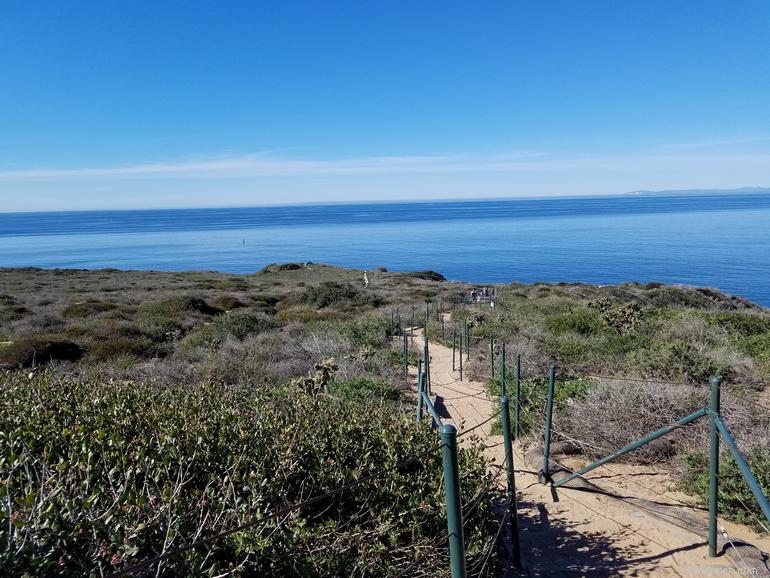
The Dana Point Headlands Nature Preserve (also known as the Dana Point Headlands Conservation Area) offers one of the most stunning coastal experiences in Southern California. Perched atop dramatic bluffs overlooking the Pacific Ocean, this preserved area protects rare native habitats while providing easy public access to breathtaking views, wildlife watching, and serene trails.
Stunning Bluff-Top Views and Panoramic Vistas
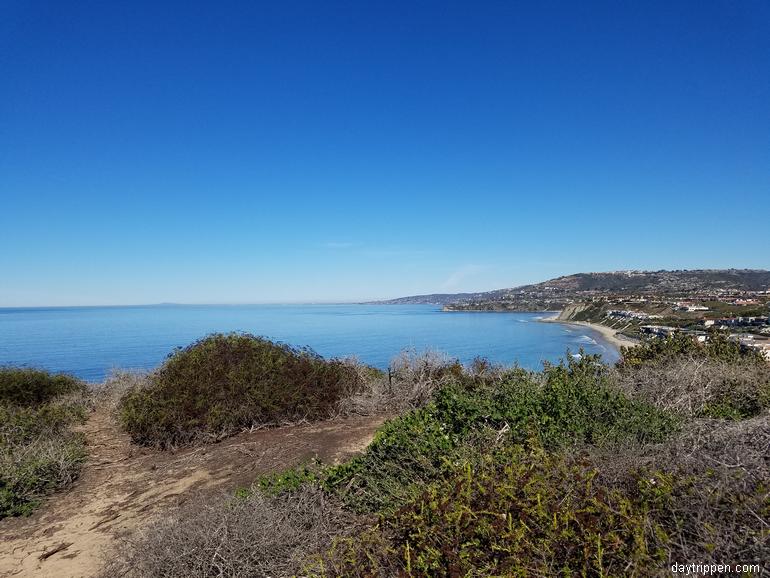
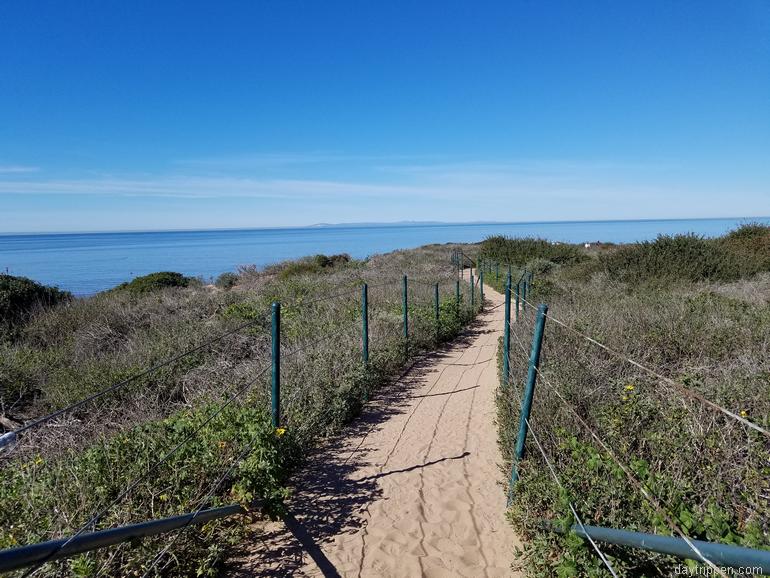
The headlands feature a short but rewarding 0.5-mile trail (the Dana Point Preserve Trail) with multiple lookout points. On clear days, gaze south toward Oceanside, north to Laguna Beach, and northwest to Catalina Island. The elevated position delivers sweeping ocean panoramas, dramatic cliffs, and the chance to spot surfers below or boats entering Dana Point Harbor.
Prime Shore-Based Whale Watching Spot
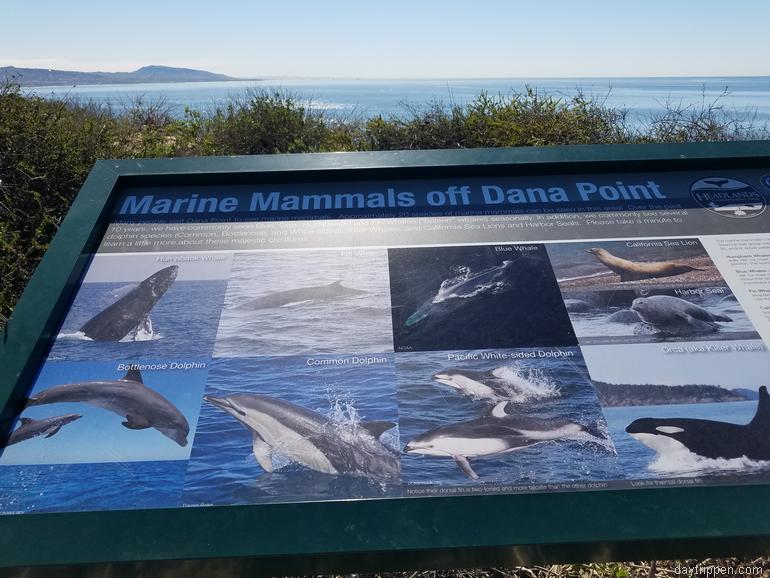
This is one of the best free places in Orange County to view migrating whales. From December through April, gray whales travel past on their journey to Baja California, with peak sightings in February and early March. Summer brings occasional blue whale opportunities. Many visitors spot spouts, breaches, or pods directly from the bluffs—no boat required.
Nature Interpretive Center and Guided Opportunities
The Dana Point Nature Interpretive Center (34558 Scenic Dr, Dana Point, CA 92629) is a must-visit hub. Open Tuesday–Sunday, 10 a.m.–4 p.m., it features exhibits on local geology, plants, animals, and the area’s history. Learn about endangered species like the Pacific pocket mouse and coastal California gnatcatcher that thrive here. Free public guided walks depart from the center at 9 a.m. on the first, second, and third Saturdays each month.
A Connected Trail System and Nearby Beaches
The broader Dana Point Headlands Conservation Area spans nearly 60 acres across four parks: Harbor Point Conservation Park, Dana Point Preserve, Hilltop Conservation Park, and South Strand Conservation Park. A roughly 3-mile trail system connects them, including pedestrian paths, scenic overlooks, coastal access, and links to the wide sands of Strand Beach. Trails wind through coastal sage scrub and bluff habitats rich in native plants and wildlife. Allow about 45 minutes for the main preserve trail, then extend your day relaxing on Strand Beach.
Convenient Free Parking and Access Tips
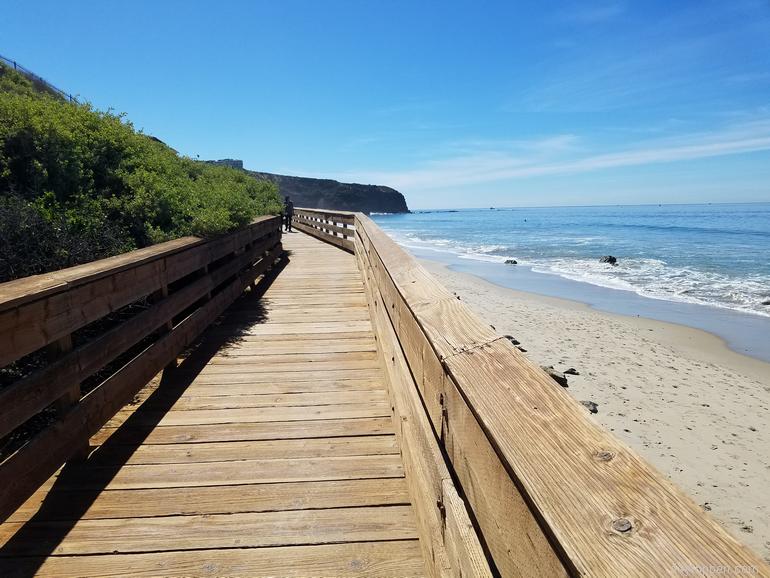
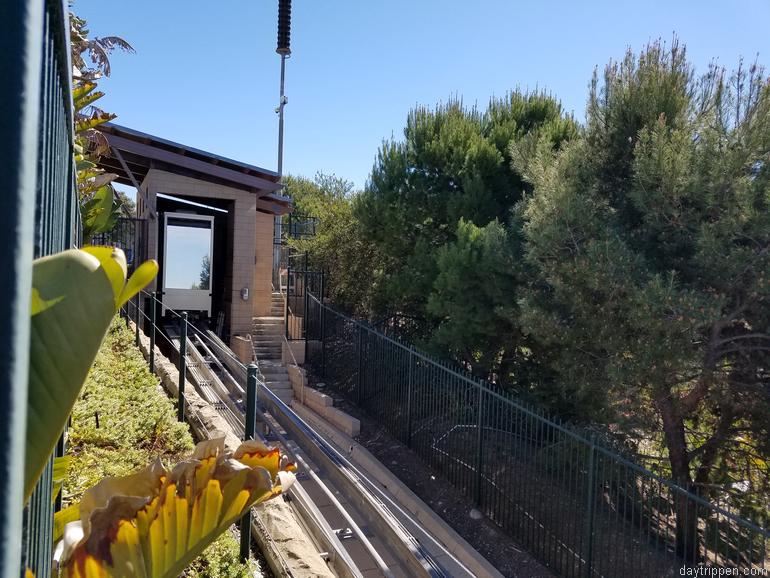
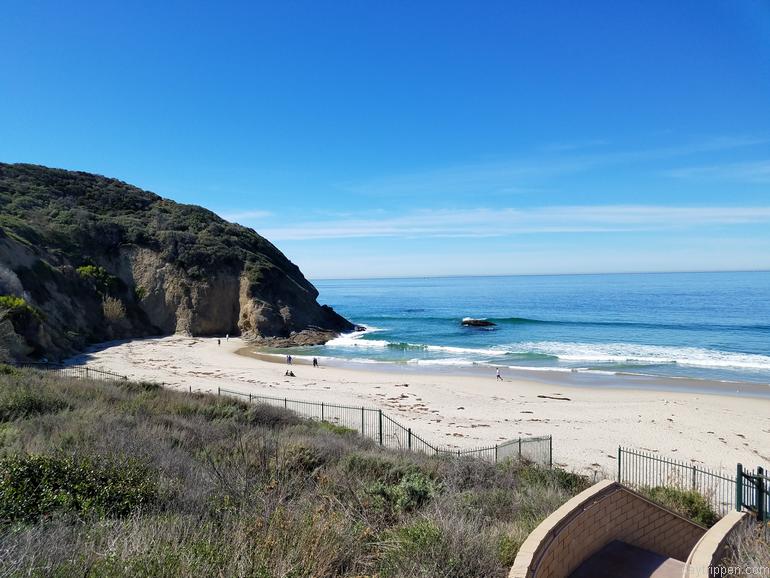
Parking is abundant and free—unlike many SoCal beaches. Park at Strand Vista Park and hike uphill to the preserve. On the way back, descend via the zigzag trail to Strand Beach, then use the free Strand Beach Funicular (a fun little cable car) or stairs to return. The funicular operates on weekends/holidays during the off-season and daily (6 a.m.–8 p.m.) from Memorial Day through summer. Additional free spots are at the end of Dana Strand Road or the small lot near the Nature Interpretive Center. Dogs are not permitted on preserve trails or Strand Beach, but are allowed on the bluff trail at Strand Vista Park.
The History of the Dana Point Headlands
The Dana Point Headlands have a layered past, from early 20th-century subdivision attempts to intense preservation battles. In the 1920s, parts of the area were subdivided into lots, and some residential enclaves were built. By the 1970s–1980s, plans called for hundreds of homes, hotels, and commercial development, with approvals from Orange County and later the City of Dana Point.
After Dana Point was incorporated in 1989, debates intensified over this last major undeveloped coastal promontory in Southern California. A pivotal 2004 Headlands Development and Conservation Plan (HDCP)—approved by the City and California Coastal Commission—struck a balance: allowing development on about 86 acres while permanently protecting roughly half (nearly 60 acres) as conservation parks and open space. This included safeguarding environmentally sensitive habitats under the Orange County Natural Communities Conservation Plan/Habitat Conservation Plan (NCCP/HCP).
The Dana Point Preserve (29.4 acres) was acquired in 2005 by the Center for Natural Lands Management (CNLM) to protect rare species, including the endangered Pacific pocket mouse (rediscovered here in the 1990s after being thought extinct) and the coastal California gnatcatcher. The Nature Interpretive Center opened in 2010, enhancing public education. Today, this compromise preserves natural beauty amid surrounding luxury homes, setting an example for urban conservation.
Dana Point Headlands is an ideal day trip destination. After exploring, head to nearby Dana Point Harbor for dining, whale-watching charters, or ferries to Catalina Island.
FAQ: Dana Point Headlands Nature Preserve
What are the trail hours and access rules?
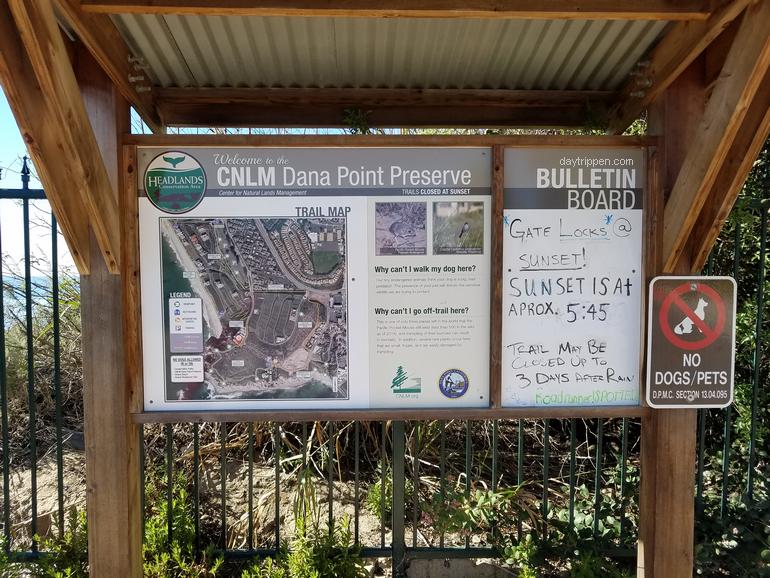
Trails are generally open daily from 7 a.m. to sunset (City-managed sections); the Dana Point Preserve (CNLM-managed) may have restricted days/hours (e.g., Tuesday, Thursday, Saturday 8 a.m.–4 p.m. in some periods—check current status). Gates lock at sunset. No dogs allowed on trails or beach.
Is there an entrance fee?
No—everything is free, including parking, trails, the Nature Interpretive Center, and the funicular.
How long should I plan to visit?
45 minutes to 1 hour for the main bluff trail and views; 2–4+ hours if combining with the full trail system, beach time, and center exhibits.
What’s the best time for whale watching?
December–April for gray whales (peak Feb–early March); summer for possible blue whales or dolphins.
Are the trails easy?
Mostly easy to moderate: short bluff trail is accessible with some elevation; full loop (about 2.7–3 miles) includes stairs, dirt paths, and beach sections—wear good shoes.
What wildlife might I see?
Beyond whales: coastal birds (including gnatcatchers), rabbits, lizards, rare plants in coastal sage scrub, and tidepool life at low tide near beaches.
Is it wheelchair accessible?
Some areas (like parts near the center and overlooks) are: trails are mostly dirt/sand with uneven terrain—check specifics.
Best Orange County Day Trips: Beaches, Trails, and Hidden Gems