- 24
- 44shares
Almost a Ghost Town With a Desert Theater That Refuses to Die
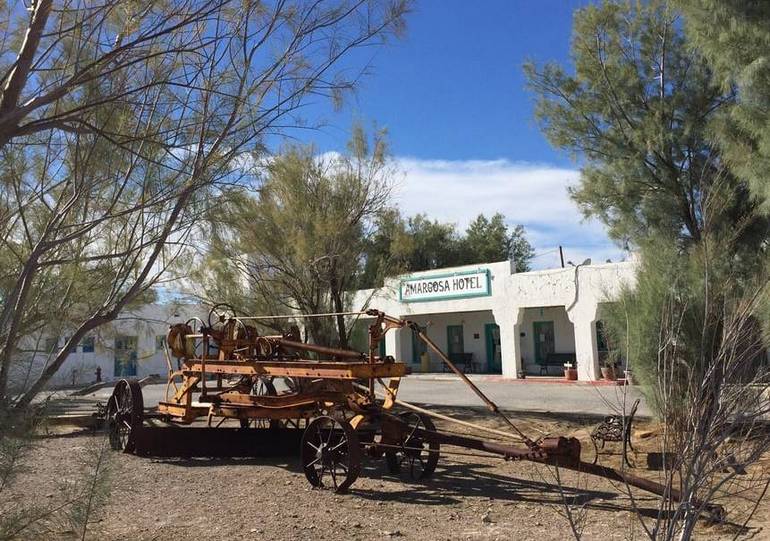
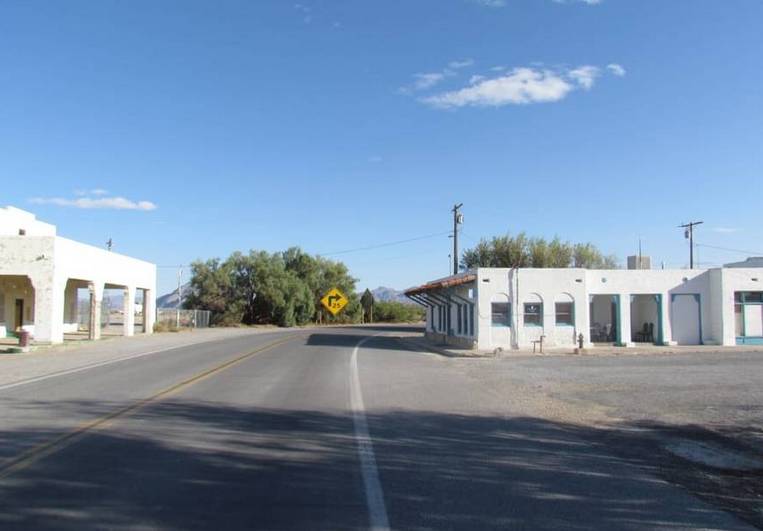
Drive the long straight stretch of California Highway 127 through the Amargosa Valley and the landscape feels empty enough to make you question whether you took a wrong turn. Then the low Spanish Colonial Revival buildings appear at the junction of 127 and 190. This is Death Valley Junction, a place that once hummed with borax trains and miners and now holds on through one determined cultural landmark and the stubborn desert itself.
What remains is both quiet and surprisingly alive. The Amargosa Opera House and Hotel still welcome visitors. The rest of the old company town has largely faded into ruins and open space. For travelers heading into or out of Death Valley National Park, it makes a memorable stop that mixes railroad history, one woman’s artistic obsession, and the practical reality of a true desert outpost.
From Railroad Water Stop to Borax Company Town
Death Valley Junction began as a practical necessity. The Tonopah and Tidewater Railroad pushed north from Ludlow in the early 1900s to serve the borax mines of the Pacific Coast Borax Company. By 1907 the line reached this spot in the Amargosa Valley, and a short spur soon connected it to the Lila C. Mine. The settlement grew around the need for water, switching, and processing.
In 1914, a separate 20-mile narrow-gauge line, the Death Valley Railroad, was built from the junction to the new mines at Ryan on the eastern edge of Death Valley. Ore moved down to a mill at the junction for processing and packaging. The Pacific Coast Borax Company constructed more permanent buildings around 1915 and, between 1923 and 1925, added the hotel, theater (then a recreation hall), and supporting structures in Spanish Colonial Revival style. Architect Alexander Hamilton McCulloch designed the complex that still forms the historic core.
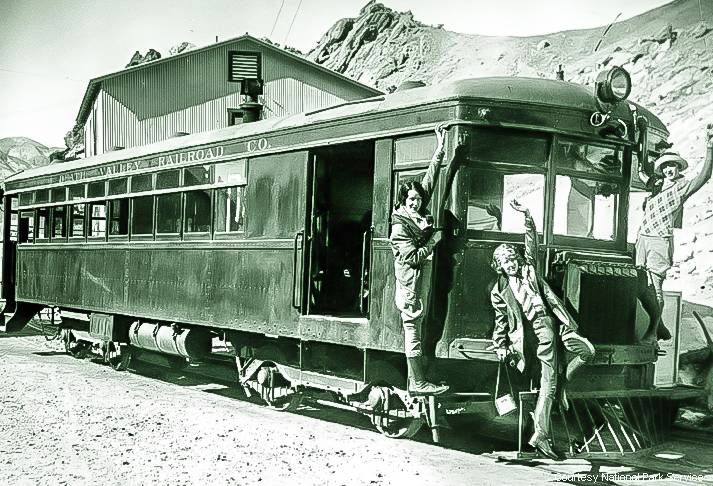
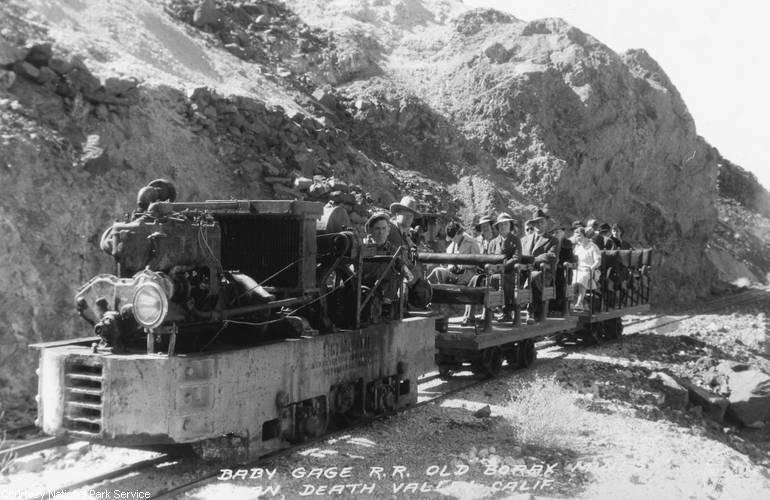
At its height, the town supported a few hundred people with a hotel, saloon, store, and the usual services of a company town. The railroad tracks are long gone, pulled up decades ago, yet the old grade remains visible in places along Highway 127. Across from the Amargosa Café building, you can still see remnants of the mill. The hotel once catered to railroad investors, workers, and the early tourists who rode a Brill self-propelled passenger car the roughly 20 miles out to Ryan. From there, visitors could tour the mines and ride the even narrower “Baby Gauge” railroad that served the workings.
The Death Valley Railroad shut down in 1931. The Brill car now sits at the Laws Railroad Museum in Bishop, and one of the original steam locomotives is displayed at the Borax Museum in Furnace Creek. Ryan itself is under the care of the Death Valley Conservancy, and access remains limited.
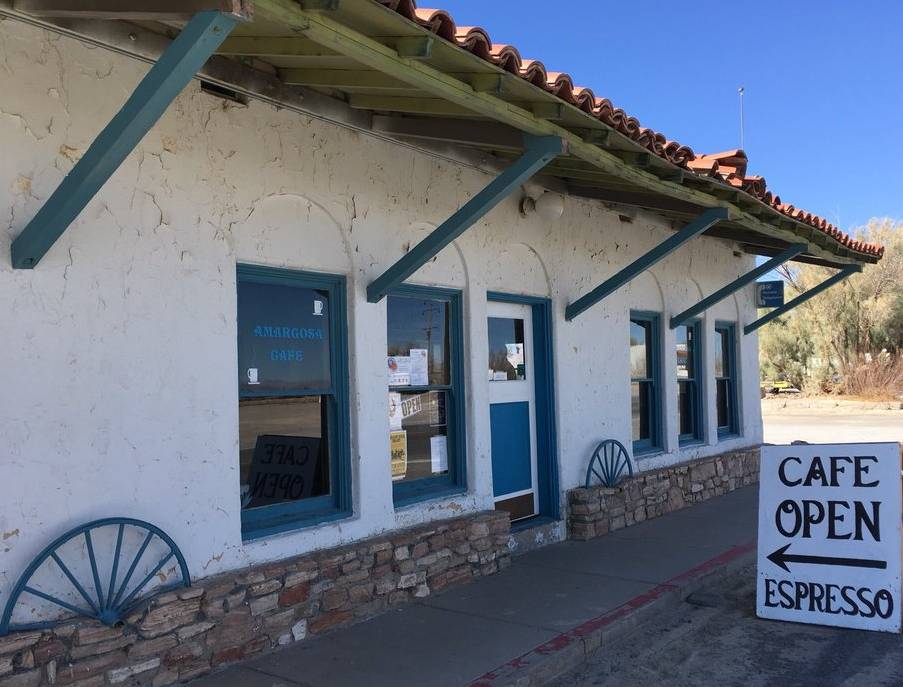
By the 1950s, with the main rail line abandoned in 1940 and traffic gone, Death Valley Junction had dwindled to little more than a gas stop on the way into the national park. The gas station is permanently closed today. The Amargosa Café is also closed. The town is essentially a historic district owned by the nonprofit that runs the Opera House and Hotel.
Marta Becket and the Amargosa Opera House
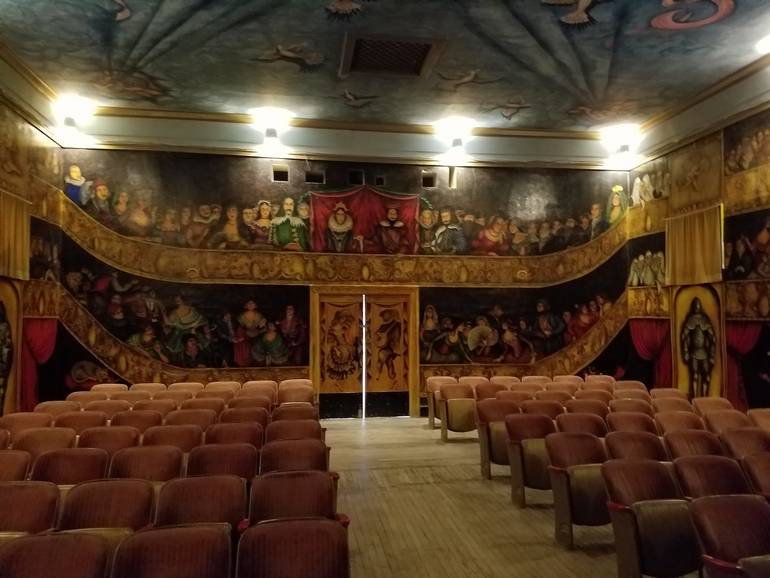
The story that keeps people coming is the one that began with a flat tire in 1967. Dancer and actress Marta Becket and her husband stopped at the junction. While waiting for repairs, she walked over to the old recreation hall, peered through a hole in a door, and saw a space in disrepair that somehow called to her. She rented it, began fixing it up, and renamed it the Amargosa Opera House.
Becket painted the walls and ceiling over several years with an elaborate Renaissance-style audience of kings and queens, clowns, jousters, revelers, musicians, and even her own cats. She performed her one-woman ballet and mime shows for four decades, sometimes to a handful of people and sometimes to empty seats. She kept going until her final performance in 2012 and died in 2017 at age 92.
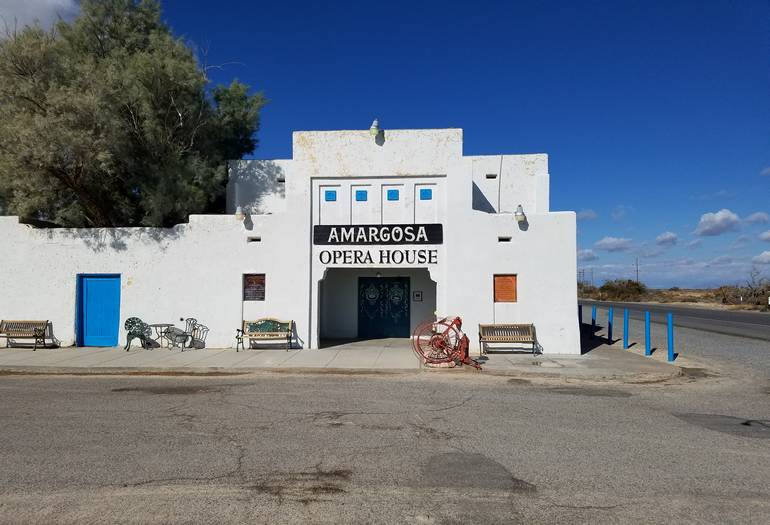
The theater and hotel complex is listed on the National Register of Historic Places as part of the Death Valley Junction Historic District. The nonprofit Amargosa Opera House, Inc., which Becket established, owns the property and continues her legacy. Jenna McClintock, a dancer inspired by seeing Becket as a child, later performed Becket’s repertoire for several seasons before retiring from regular shows at the Opera House in 2016. Today, the stage hosts tours, special performances, anniversary events around the February date of Becket’s first show, and occasional visits by artists and groups.
Tours of the Opera House run daily at 9 a.m. and 6 p.m. Adults pay $20, children $10; payment is at the hotel front desk. The hotel itself remains open year-round with basic historic rooms. Recent monsoon flooding has damaged adobe walls, floors, and other infrastructure, and the organization has run fundraising campaigns to keep the buildings standing. Check the official website for current performance schedules and any temporary changes.
Information for Your Visit
Death Valley Junction sits at the meeting of California State Routes 127 and 190. There is no gas, no grocery, and no open café on site. The nearest reliable services are in Shoshone to the south, at the Longstreet Inn a short drive north across the Nevada line, or farther on toward Beatty or Pahrump. Carry water and plan fuel stops carefully, especially in summer when temperatures routinely climb past 110°F.
The Opera House and Hotel form the main reason to pause. Walk the grounds, take the tour if the timing works, and notice how the painted audience still fills the theater even when the seats are empty. The surrounding ruins of the old borax-era buildings give a sense of the scale the place once had.
Nearby Stops Worth the Extra Miles
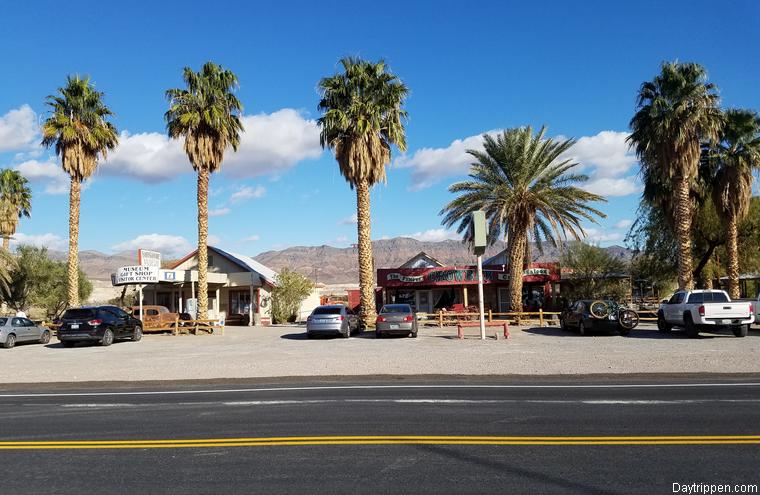
Shoshone: Museum, Lodging, and a Biker Bar
A short drive south on 127, Shoshone began as a railroad stop on the same Tonopah and Tidewater line and still functions as a useful desert service point. It offers a small museum, lodging, a market, and a sense of the older mining and railroad landscape. Many travelers treat it as a quick fuel or food stop on the way into Death Valley, but the historic core rewards a slower look.
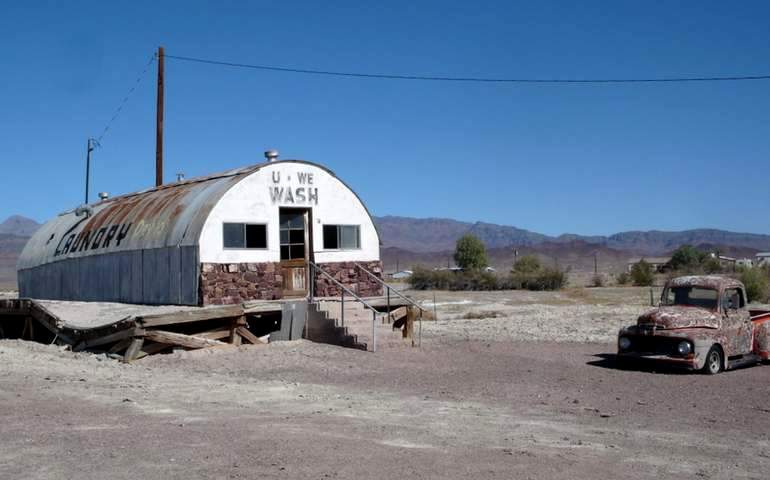
Tecopa Hot Springs: Resorts, Campgrounds, & Natural Hot Springs
Farther south along the Old Spanish Trail corridor, Tecopa is known for its natural hot springs and informal soaking culture. The area once served wagon trains heading to California. Today it offers hot mineral baths, a few resorts and campgrounds, and the nearby Death Valley Brewery for those looking for a cold drink after the desert heat. It is roughly 90 minutes from Furnace Creek or from Las Vegas, depending on your route.
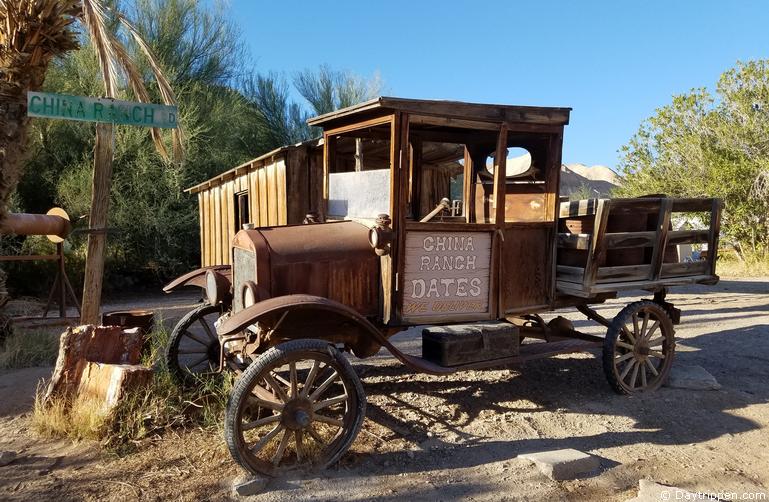
China Ranch Date Farm: Date Shakes, Muffins, & Cookies
Tucked into a palm-lined canyon near Tecopa, China Ranch is a working family farm that feels like an oasis after miles of open desert. Visitors can buy fresh dates, date shakes, muffins, cookies, and other baked goods, browse the gift shop, and walk short trails along the Amargosa River corridor and through the groves. The site has long ties to the Old Spanish Trail and the railroad era. Hours are typically daytime only; confirm before making the drive down the graded road.
Why Death Valley is a Must-Stop
Death Valley Junction never became a polished tourist town, and that is part of its appeal. The railroad that created it is gone. The mill is a ruin. The gas pumps are silent. What remains is the Opera House with its hand-painted audience, the hotel that still rents rooms, and the wide empty valley that framed the whole story.
A stop here adds texture to any Death Valley trip. You get the industrial history of borax and the narrow-gauge lines that moved it. You get the improbable tale of a dancer who turned a forgotten recreation hall into a theater that still draws people from around the world. And you get a clear sense of how thin the line can be between a living place and a ghost town in the Mojave.
Check current conditions before you go—especially road status, hotel availability, and Opera House tour or performance times. Bring more water than you think you need. Then pull off at the junction, walk the quiet streets, and step inside the theater. The painted faces on the walls will be waiting.
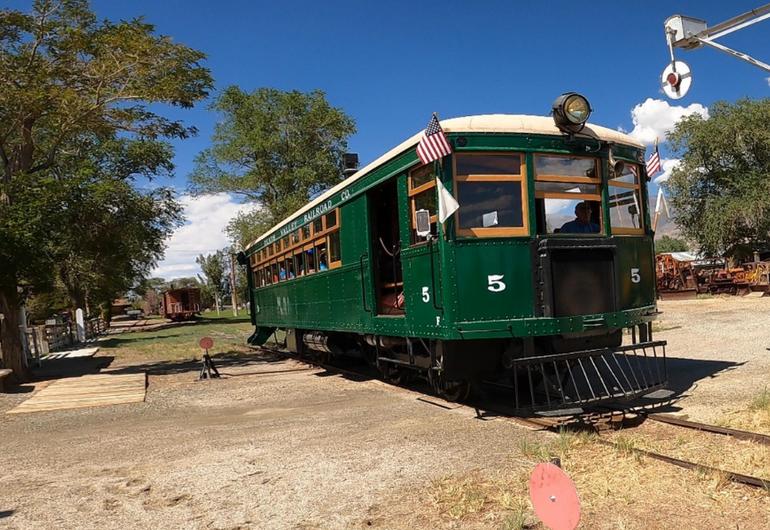
Death Valley Railroad Brill Car
The original Death Valley Brill car can be seen at the Laws Rail Museum in Bishop, California, and one of the original Death Valley Railroad steam engines can be seen at the Borax Museum at Furnace Creek in Death Valley. Ryan Mines and the town of Ryan are currently under the care of the Death Valley Conservancy, which limits access to this historic area of Death Valley. The Death Valley Brill Car was a self-propelled railcar used to transport tourists from Death Valley Junction to the mining town of Ryan, a distance of 22 miles.
Discover more from Daytrippen.com
Subscribe to get the latest posts sent to your email.
I grewup in the High Desert and love the history of it. Seems like im always hearing something new. Theres so much more history of the desert than people think.
Lived there in the late seventies, worked in the borax mines .at that time the population was 12.