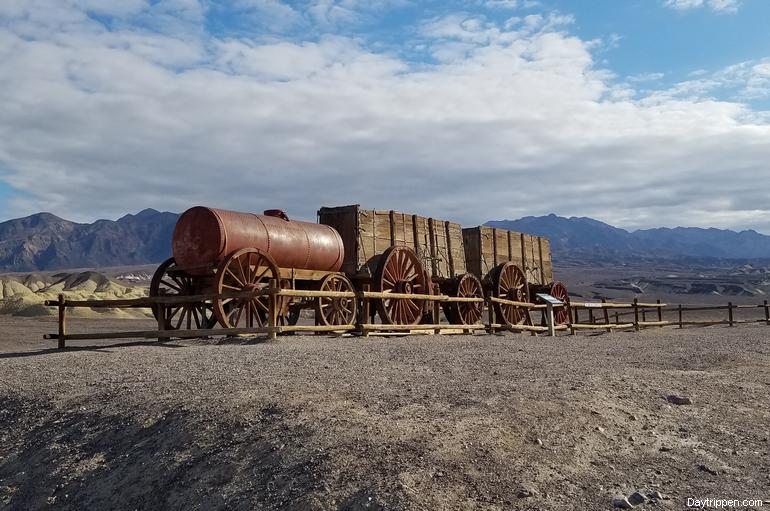
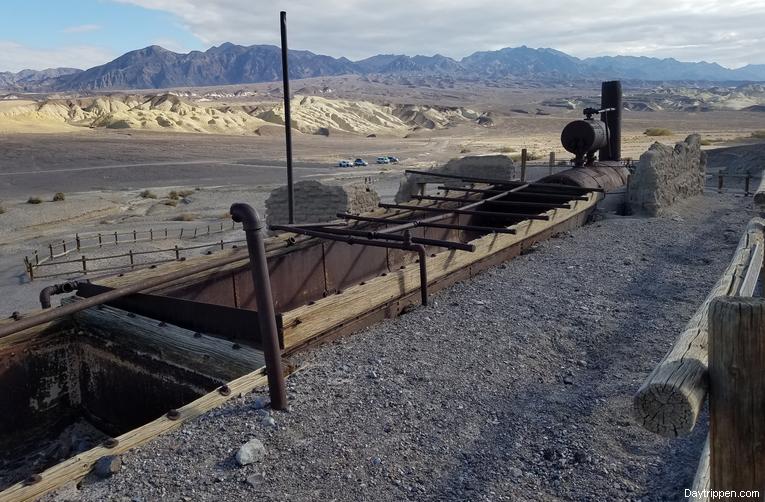
Harmony Borax Works is a popular attraction in Death Valley National Park. The site contains the remains of the processing plant and a few buildings that made up the mining camp of Harmony. Harmony Borax Works was only used to process Borax between 1882 and 1888. The site was added to the National Register of Historic Places on December 31, 1974, and is preserved as a historic site within Death Valley National Park.
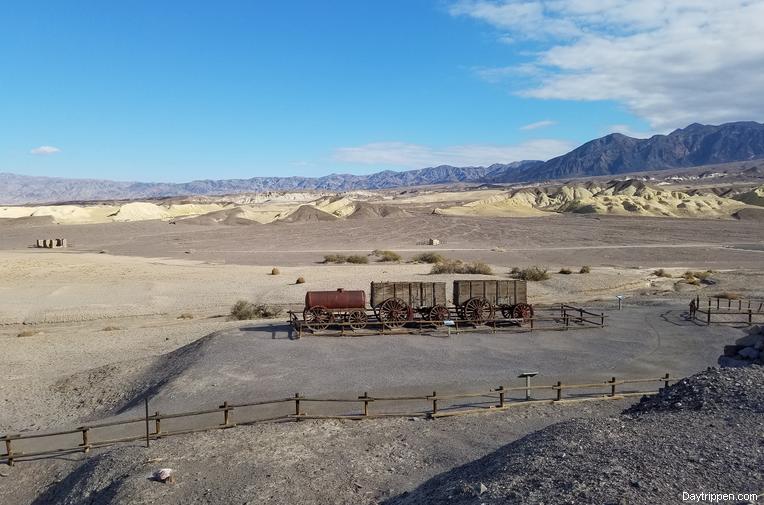
Visiting the Death Valley Borax Works Site
Visitors can explore a 0.4-mile paved interpretive loop trail at Harmony Borax Works, featuring adobe ruins, a surviving twenty-mule team wagon set, and informational plaques detailing the mining process, the role of Chinese laborers, and the mule teams. The trail is family-friendly, wheelchair-accessible (with caution due to slight grades), and takes about 20-30 minutes to complete. Note that hiking is not advised after 10 AM in summer due to extreme heat, and pets are not allowed on the trail.
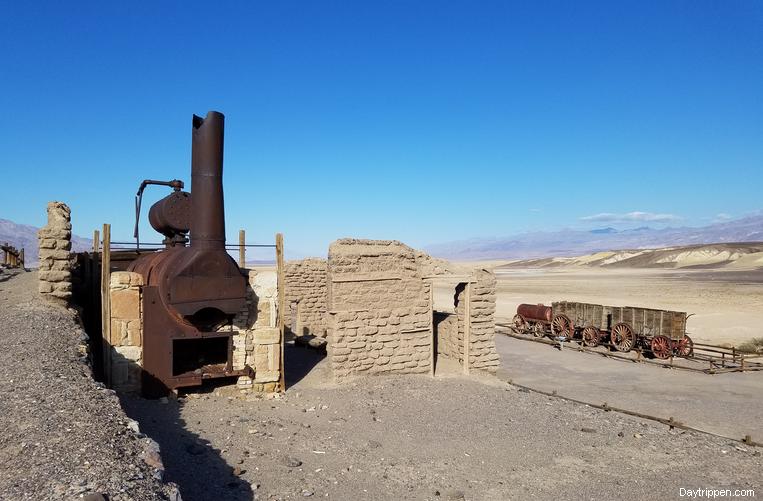
History of Harmony Borax Works
At its height, the little mining camp of Harmony had about 40 workers. Most of the Chinese laborers slept in tents. Harmony had a few permanent buildings, including a store and dining hall. The ruins of these buildings can be seen in the valley below the Borax works.
Borax Mining & Processing
Working at the borax plant involved hard manual labor. Workers collected the white gold and Borax from the nearby playa. The borate was then transported to the plant using handcarts. After that, the ore was boiled in dissolving tanks to remove impurities. The final step was to crystallize the ore in holding tanks. Once processed, the Borax was dried in the desert sun before being shipped out of the valley. Due to the extreme desert heat, Harmony Borax Works was not used during the summer.
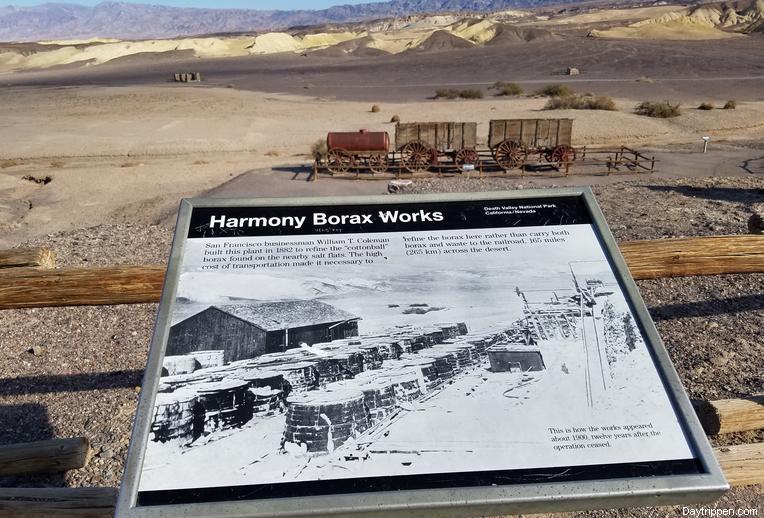
20-Mule Team Wagons
Borax was transported from the mill by 20-mule team wagons over a distance of 165 miles to the railhead in Mojave, California. The iconic twenty-mule team wagons, which consisted of two box wagons and a water tank, were pulled by a team of 18 mules and two horses. These impressive 100-foot-long teams became legendary as they navigated the rugged route through Wingate Pass and the Devil’s Golf Course, completing the journey in about 20 days to reach Mojave.
Closure and Legacy
The Harmony Borax Works operated until 1888, when falling borax prices caused a financial collapse and led to its closure. In 1890, Francis Marion “Borax” Smith acquired the site and incorporated it into the Pacific Coast Borax Company. However, operations soon shifted to richer deposits in the Calico Mountains near Barstow. For a brief period, the famed 20-mule teams from Death Valley transported ore from the Calico Mountains to Daggett, California, until a narrow-gauge railroad was built.
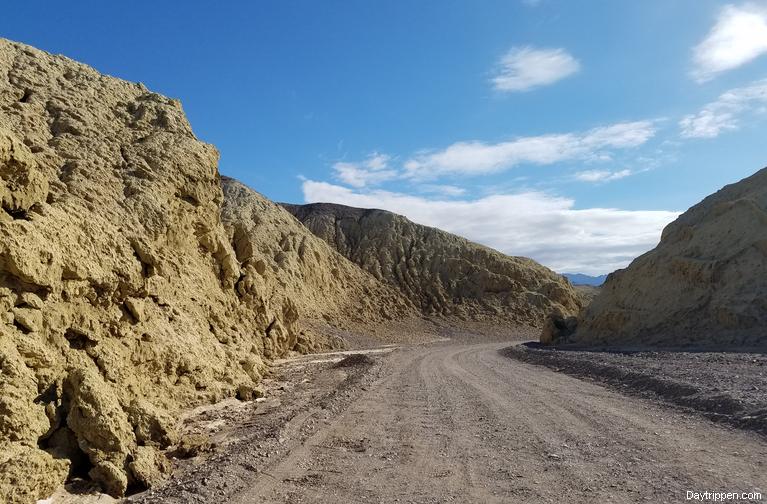
Drive Through Mustard Canyon
After visiting the Harmony Borax Works, you can return to Highway 160 via the paved road or drive through Mustard Canyon. The dirt road runs adjacent to the playa where the Borax Crystals were collected. Then, it passes through a series of canyons before returning to Highway 160. Harmony Borax Works is one mile north of the Furnace Creek Visitor Center. The visitor center has information on the Borax Works and the many other attractions in Death Valley National Park.
Death Valley Visitor Center
The Death Valley Visitor Center is where you pay park entrance fees if traveling from California. You can pick up maps, buy souvenirs, and use the restrooms. The visitor center also has an attractive section with exhibits about the history of Death Valley. We also recommend stopping at Furnace Creek Ranch and visiting the Borax Museum. The museum houses artifacts from the early mining days of Death Valley, along with an impressive collection of wagons and mining equipment.
Tips for Visiting
Location and Access: Harmony Borax Works is off CA-190, 1.8 miles north of the Furnace Creek Visitor Center, with a paved parking lot suitable for RVs and buses. The trailhead is at the southern end of the lot.
Preparation: Bring plenty of water, sunscreen, and a hat, as Death Valley’s heat can be extreme, even in winter. Nighttime temperatures can remain above 90°F in summer. For stargazing, Harmony Borax Works is a good spot, but bring a red light to avoid disturbing others.
Safety: Cell service is spotty, so ensure your vehicle has a full tank of gas and carry extra water and snacks. Check road conditions, especially for dirt roads like Mustard Canyon.
Exploration: Combine a visit to Harmony Borax Works with nearby attractions for a half-day itinerary. For example, start at the Furnace Creek Visitor Center, visit the Borax Museum, explore Harmony Borax Works, drive through Mustard Canyon, and end at Zabriskie Point for sunset.
Your Might Like
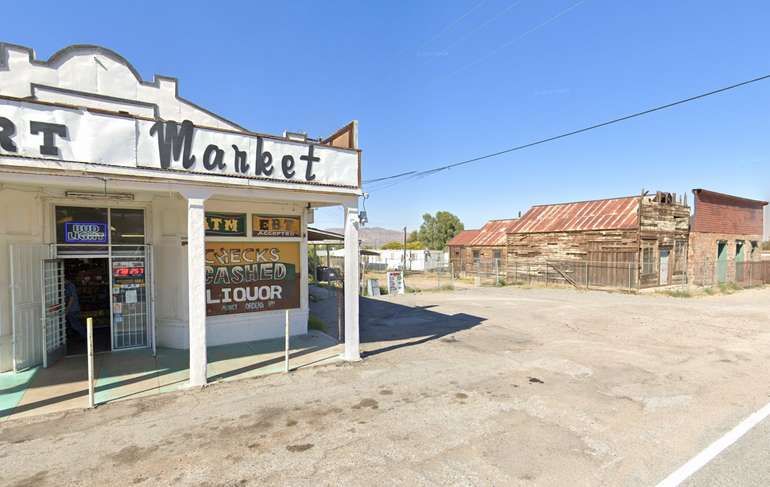
Daggett, California – Almost a Ghost Town
Daggett, California, was founded in the late 1800s and was initially named Calico Junction. The town was renamed in 1883 to Daggett by the owner of the Bismarck Silver Mine, John R. Daggett. A stamping mill was constructed near the Mojave River bed around 1884. 20-mule teams were used to haul the ore from the Calico Hills to the mill for processing.
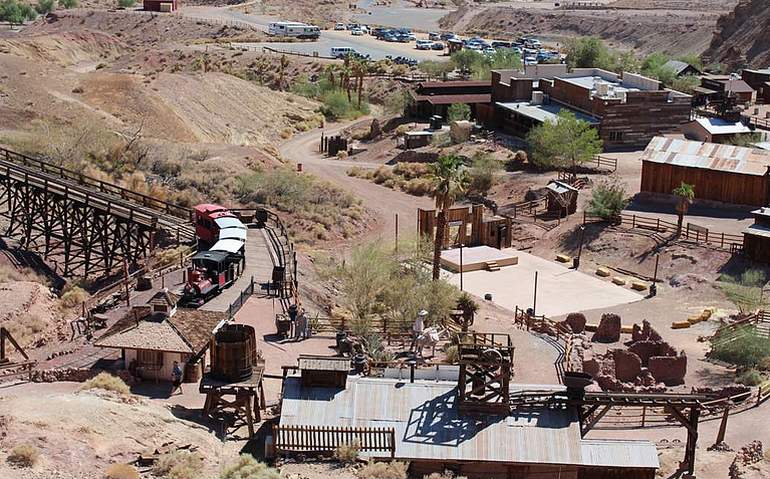
Calico Ghost Town Near Barstow, California
Calico Ghost Town is a historic town that survived the silver rush. It is one of the few remaining towns of the Old West and is now a California Historical Landmark and a San Bernardino County Park. Although it was once filled with miners, nowadays, the streets are packed with tourists eager to explore all that the town has to offer.
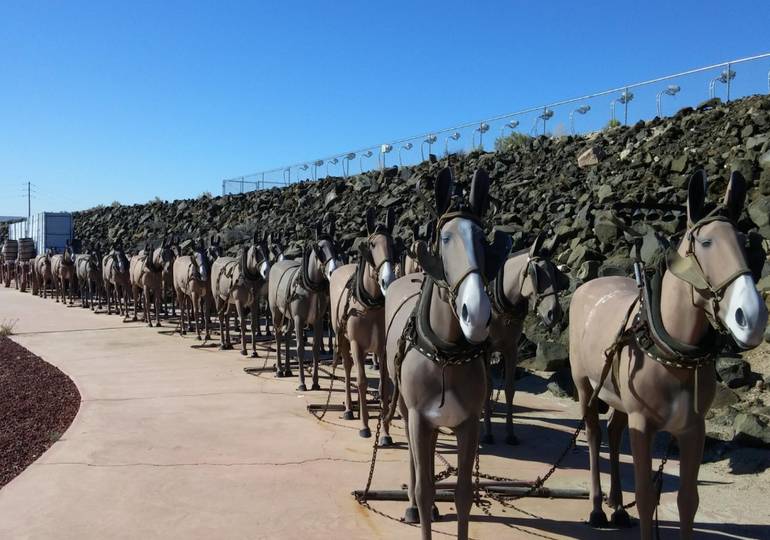
Borax Visitor Center in Boron, California
The Borax Visitor Center, nestled in the Mojave Desert in Boron, California, offers a unique experience. Perched atop a vast heap of material extracted from the borax mine pit, it provides awe-inspiring views of the Rio Tinto Borax processing plant and the largest open-pit mine in California.