
Laws Railroad Museum: Historic Depot, Brill Car Rides & Pioneer Village
Just a short drive north of Bishop, the Laws Railroad Museum and Historic Site preserves the story of a once-busy narrow-gauge railroad town and the broader pioneer life of California’s Owens Valley. The museum occupies the original 1883 Carson & Colorado Railway depot grounds and surrounding 11 acres, where the village of Laws once thrived. Visitors walk among original railroad structures and dozens of relocated historic buildings filled with mining equipment, farming tools, wagons, and everyday artifacts from the late 19th and early 20th centuries.

The centerpiece remains Southern Pacific No. 9, the Slim Princess steam locomotive that made the line’s final steam-powered runs. The site is California Historical Landmark No. 953 and is listed on the National Register of Historic Places. Operated by the Bishop Museum and Historical Society, it offers a grounded look at how the railroad shaped settlement, ranching, and mining in the Eastern Sierra before trucks and water exports changed the valley’s economy.

Slim Princess Old Number Nine
Southern Pacific No. 9, known as the Slim Princess, sits on a short stretch of original narrow-gauge track beside the depot. Baldwin Locomotive Works built this 4-6-0 in November 1909 for the Nevada-California-Oregon Railway. Southern Pacific acquired it in the late 1920s and placed it in service on the Owens Valley line in 1930.
The engine pulled the last revenue steam-powered freight on the Southern Pacific narrow-gauge system on August 25, 1959. On April 30, 1960, it arrived at Laws for the final time, ending regular operations. For decades it stood outdoors as a static display. In recent years, volunteers have moved it into the Engine House and begun restoration work, including smokebox repairs and a boiler assessment. The project explores returning the locomotive to live steam, though any operational status remains a multi-year effort dependent on funding and condition. Caboose 401 and several freight cars complete the short train display.
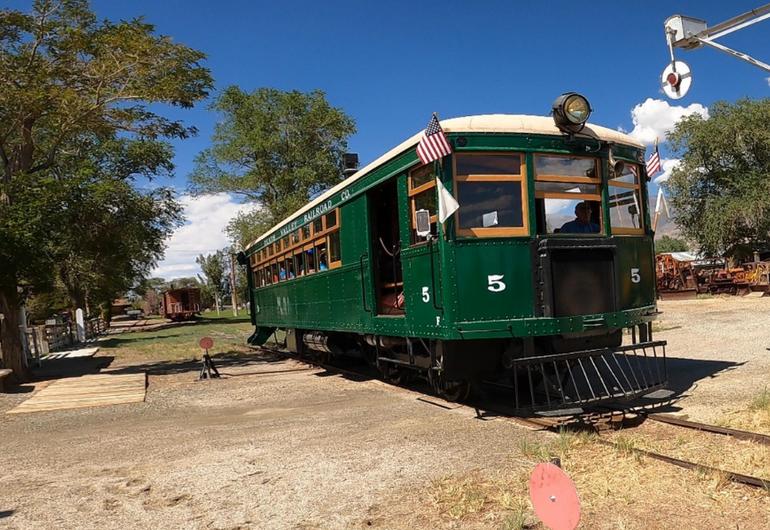
Death Valley Railroad Brill Car
The museum also operates the restored Death Valley Railroad Brill Car No. 5, a 1927 self-propelled railcar that once carried tourists and workers the 22 miles between Death Valley Junction and the mining town of Ryan. Fully restored and operational, it offers narrated 15–20-minute rides on select weekends.
Docents share stories of the car’s service and the region’s broader history as the vehicle travels the museum’s short track. Tickets are typically $8 for adults and $4 for riders under 18; children 3 and under ride free. Well-behaved leashed pets may ride. Check the museum’s website or call ahead for the current schedule, as dates vary with weather and volunteer availability. The experience gives a rare chance to ride original narrow-gauge equipment in the landscape it once served.

Laws Station Building and Historic Site
Originally known as Bishop Station, the community was renamed Laws after Southern Pacific superintendent R.J. Laws following the railroad’s 1900 takeover of the Carson & Colorado. The first train arrived in April 1883. The last regular train departed in 1960, closing a 77-year chapter.
The original depot now houses the museum office, gift shop, and main entrance. A suggested donation of $10 supports adult admission; children under 12 enter free. Dogs on leashes are welcome.

Only a handful of structures—the depot, agent’s house, Armstrong turntable, water tank, and oil tank—are original to the 1883 site. The remaining buildings, nearly 50 in total, were moved here from elsewhere in the Owens Valley or constructed on site to recreate the look of a small railroad town. They include a general store, schoolhouse, church, blacksmith shop, mining and milling displays (with a working stamp mill and arrastra), farm equipment areas, a wagon collection that features replicas of the famous 20-mule-team borax wagons, a mule museum, and various shops and homes filled with period furnishings and tools.
Docents often staff key areas, especially on weekends, such as the mining exhibits and engine house. The grounds also include the original turntable used to reverse narrow-gauge locomotives and the supporting water and fuel facilities that kept trains moving through the valley.

History of the Carson & Colorado and the Town of Laws
The Carson & Colorado Railroad was incorporated in 1880 with plans to run from Mound House, Nevada, near the Comstock Lode, south to the Colorado River. Construction reached only Keeler on the east side of Owens Lake. The line, sometimes called “the railroad built 300 miles too long or 300 years too soon,” opened to Laws in 1883.
Southern Pacific purchased the railroad in 1900 and operated the narrow-gauge Keeler Branch until abandonment in 1960. The decline stemmed from the closure of local mines, the rise of trucking, and the City of Los Angeles acquiring most of the valley’s water rights. By the late 1950s, little of the original town remained; most buildings had been dismantled for salvage. After the last train, Southern Pacific donated the remaining land, depot, structures, and No. 9 to Inyo County and the City of Bishop. Residents formed the Bishop Museum and Historical Society in 1964, and the museum opened to the public on April 1, 1966.

Getting to Laws Railroad Museum
The museum sits at 200 Silver Canyon Road, roughly 4.5 to 6 miles north of Bishop on U.S. Highway 6. From Bishop, head north on Highway 395, then continue on U.S. 6 where it turns north past the Owens River. Prominent signs mark the turn onto Silver Canyon Road.
Hours are generally 10 a.m. to 4 p.m. daily year-round, with some summer schedules starting at 9:30 a.m. The museum closes on Thanksgiving, Christmas, and New Year’s Day. Most buildings are wheelchair-accessible, and the site includes ramps. Amateur photography is welcome during regular hours. For current details on Brill Car rides, special events, or restoration updates, visit lawsmuseum.org or call (760) 873-5950.

A visit to the Laws Railroad Museum offers a clear window into the railroad’s role in opening and sustaining the Owens Valley. Walking the grounds among the depot, the Slim Princess, and the relocated buildings connects the narrow-gauge era to the mining, ranching, and daily life that defined the region for nearly eighty years. Whether you catch a Brill Car ride, talk with a docent about the restoration of No. 9, or explore the exhibits at your own pace, the site rewards travelers who take the short detour north of Bishop.
Interesting Points of Interest Along Highway 395
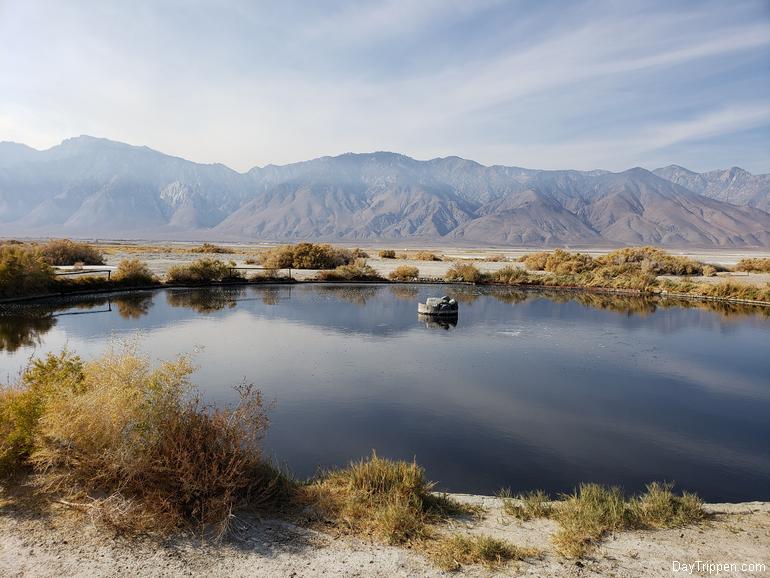
Dirty Socks Hot Spring, Olancha, California. Near the southeast shore of Owens Lake, Dirty Socks Hot Spring features a concrete-lined pool fed by an underground source. The water carries a distinctive odor that gives the spring its name. Local legend links it to miners and prospectors from the Cerro Gordo area who used the pool for bathing and laundry.

Keough Hot Springs Resort. Just south of Bishop, Keough’s Hot Springs Resort has drawn visitors since 1919, when Phillip Keough established it as a health spa. Two hot-spring-fed pools remain the main draw. Current owners have worked to recapture the resort’s 1920s and 1930s character. Hot Springs website.

Ghost Town of Little Lake, California. Farther south along Highway 395, the remnants of Little Lake mark another stop on the old narrow-gauge line. The Slim Princess paused here to take on water. Today only a few foundations remain, along with rock art and graffiti near the former hotel site.
The Big List of California High Sierra Day Trips Vacation Ideas
Discover more from Daytrippen.com
Subscribe to get the latest posts sent to your email.
I work at this museum and I want to thank you for writing this.
We have a very special place here. I just started a few months ago and look forward to many years at the great property.
While admission is technically “free”, our doors remain open because of the generous donations from visitors from all over the world.
Pleas come and visit!!