- 18
- 33shares
Rhyolite: Nevada’s Epic Boom-to-Bust Ghost Town Adventure
Imagine a desert town that exploded into existence overnight, boasting electric lights, an opera house, and a stock exchange—just to vanish almost as quickly. Welcome to Rhyolite, one of the West’s most photographed and strikingly beautiful ghost towns. Born from a 1904 gold strike in the Bullfrog Hills, this once-thriving mining hub peaked at around 5,000 residents before declining into ruins by the 1920s. Today, just a short drive from Las Vegas or Death Valley, Rhyolite offers a glimpse into the momentary frenzy of the American West’s gold rush era. Whether you’re a history buff, photographer, or adventure seeker, its decaying walls and quirky relics tell a timeless story of riches and rapid decline.
The Spark: Gold in the Bullfrog Hills
Rhyolite’s story begins in 1904, when prospectors Frank “Shorty” Harris and E. L. Cross discovered rich gold ore in the Bullfrog Hills near Death Valley. Shorty famously declared the find a “crackerjack” and predicted it would become Nevada’s banner camp. Word spread like wildfire, and by 1905, the townsite was laid out and named after the abundant silica-rich volcanic rock (rhyolite) in the area. Hundreds flocked to the region, staking over 2,000 claims. The Montgomery Shoshone Mine proved the most promising, drawing industrialist Charles M. Schwab, who invested heavily in infrastructure. Within months, tents gave way to permanent structures, and Rhyolite boomed.
A Marvel in the Desert (1907 Peak)
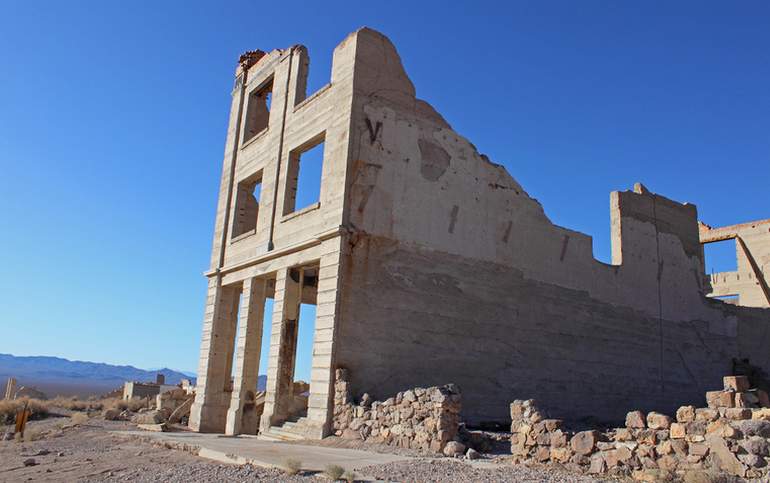
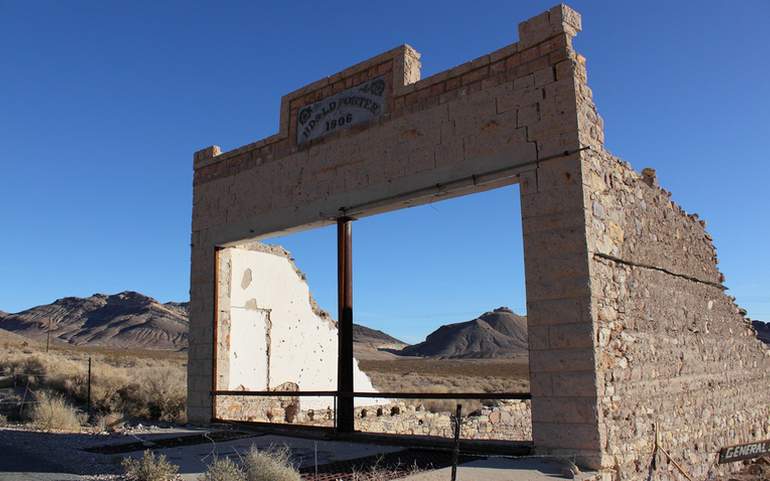
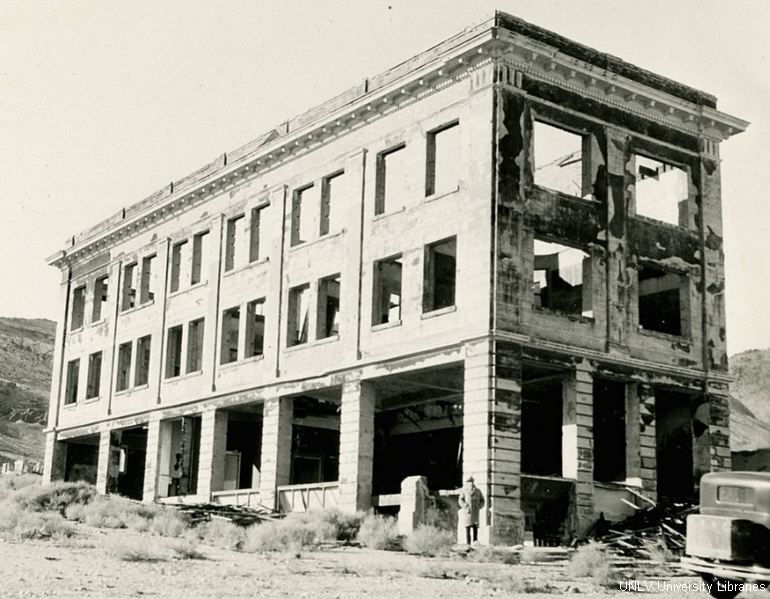
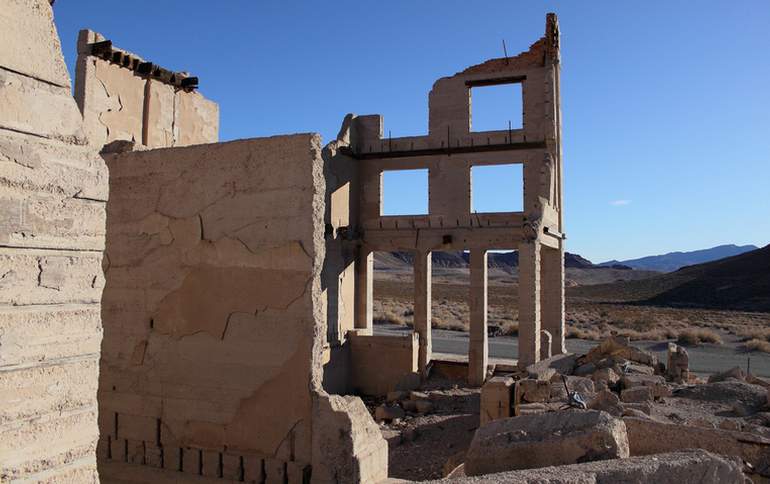
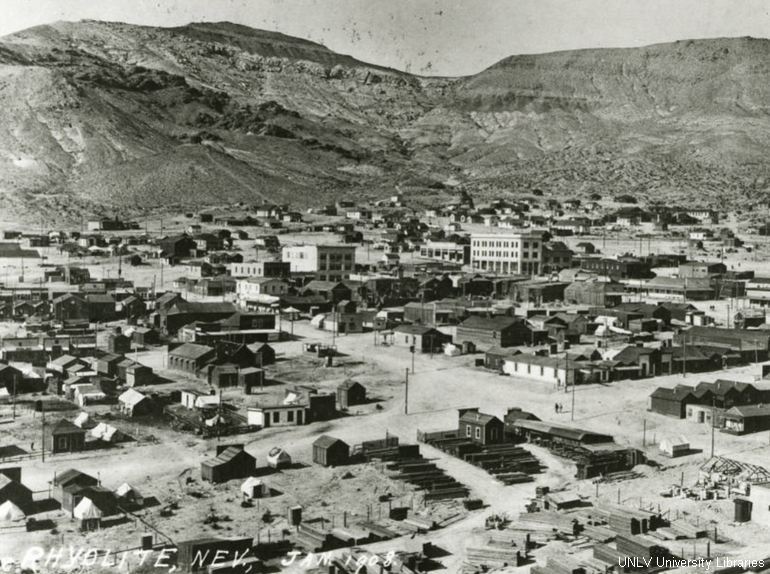
By 1907, Rhyolite was no dusty outpost—it was a sophisticated boomtown. Residents enjoyed electric lights, piped water, telephones, newspapers, a hospital, a school for hundreds of children, an opera house, and even a stock exchange. The town featured grand buildings like the three-story Cook Bank Building (one of Nevada’s most iconic and photographed ruins), a two-story eight-room school, and lively amenities, including hotels, ice cream parlors, and a busy red-light district. Social life prospered with dances, baseball games, symphony performances, and variety shows. At its height, estimates place the population between 3,500 and 5,000, with over 50 saloons and 18 grocery stores fueling the frenzy.
Tom Kelly’s Bottle House: A Quirky Masterpiece
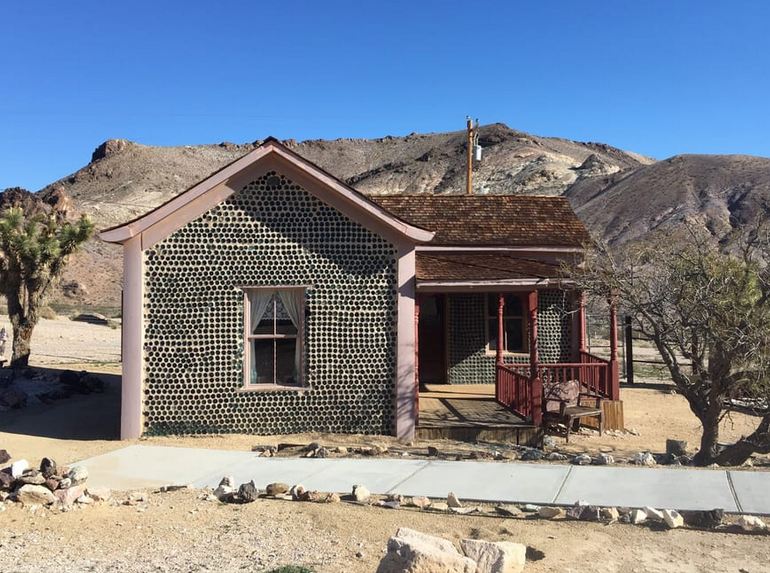
One of the most enduring oddities is the Bottle House, constructed in 1906 by miner Tom T. Kelly, who embedded 50,000 discarded beer and liquor bottles in adobe. This shimmering, multicolored home became an instant curiosity. Kelly raffled it off for $5 tickets, and the Bennet family won and lived there until 1914. Over the decades, it served as a movie set (restored by Paramount Pictures in 1925), museum, and residence. Maintained today by the Bureau of Land Management (BLM), it stands as a testament to frontier ingenuity and remains one of the site’s top draws.
The Grand Train Depot: Gateway to the Outside World
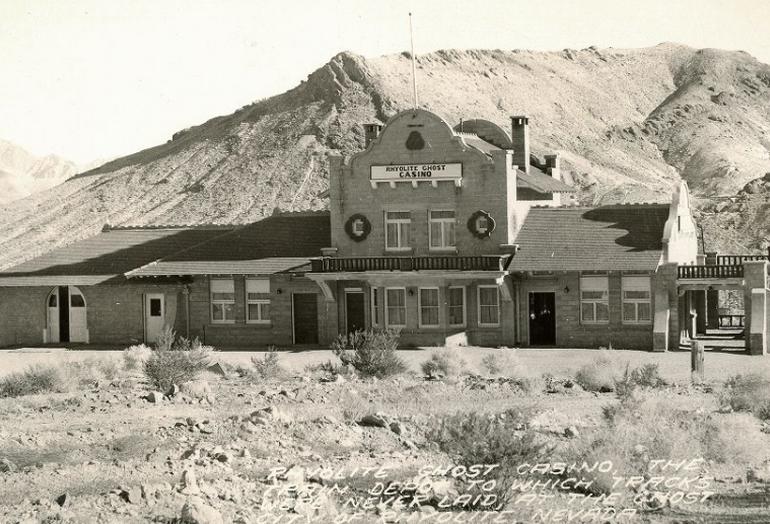
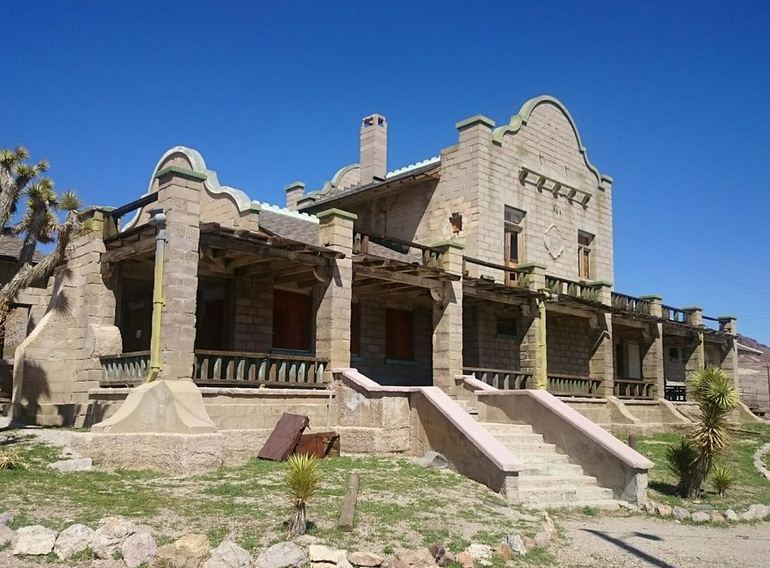
The Rhyolite Train Depot, built in 1905, connected the town to three railroads: the Tonopah & Tidewater, Las Vegas & Tonopah, and Bullfrog Goldfield. It symbolized Rhyolite’s connectivity and prosperity. Trains ran until 1914, when declining ore ended service. In 1937, the depot was repurposed as the Rhyolite Ghost Casino and bar, and later served as a museum until the 1970s. Now privately owned and fenced for protection, this well-preserved structure offers a rare, intact glimpse of the town’s heyday.
The Rapid Fall: From Boom to Bust
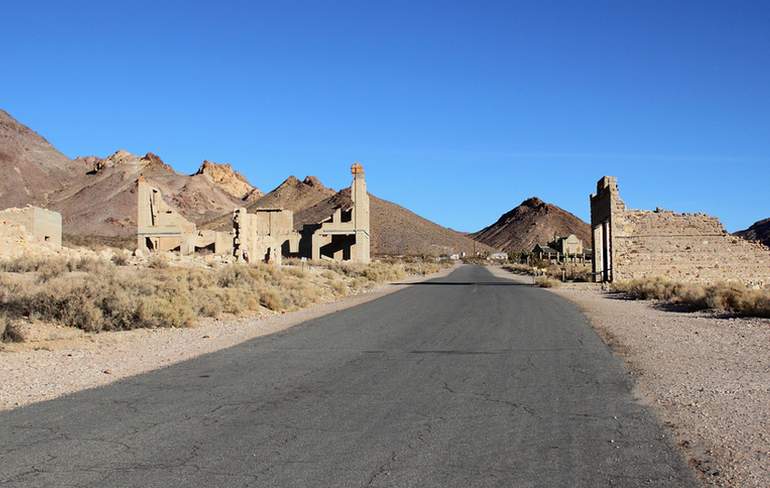
Rhyolite’s decline was as swift as its rise. The 1907 financial panic hit hard, followed by exhausted rich ore veins. Mines closed, banks failed, and residents fled. By 1910, only about 600 people remained; by 1920, the population neared zero. Wooden structures were salvaged or relocated to nearby Beatty, leaving concrete ruins to decay beneath the desert sun. Electricity was shut off in 1916, sealing Rhyolite’s fate as a true ghost town.
Rhyolite Today: A Haunting Yet Accessible Relic
Managed by the BLM, Rhyolite is open daily from sunrise to sunset (day use only). No permanent residents live here—just interpretive signs, open ruins, and an uncanny silence that lets your imagination fill in the past. Explore at your own pace: wander the Cook Bank Building’s skeletal walls, peer into the old jail remnants, and marvel at the Bottle House’s glassy glow. It’s especially photogenic at dawn or dusk, when golden light accentuates the desert isolation. Wear sturdy shoes, bring water (no facilities on-site), and respect the historic site—no climbing or removing artifacts.
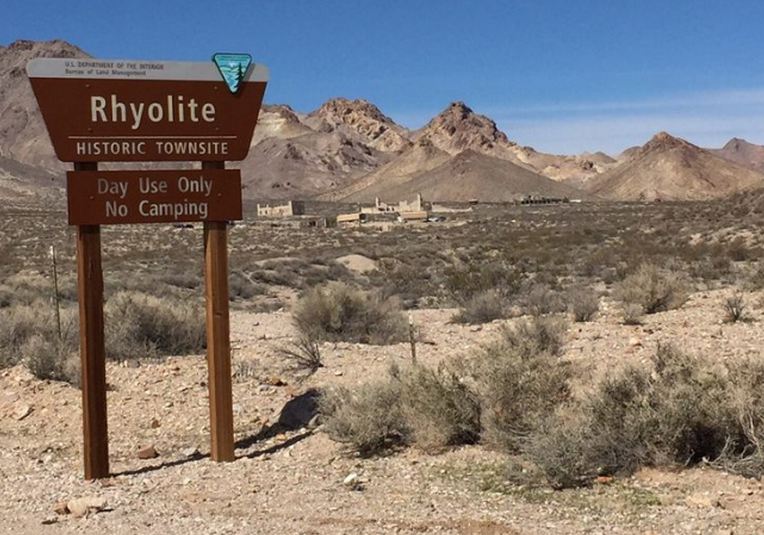
Getting There: Easy Access from Las Vegas or Death Valley
Rhyolite sits 4 miles west of Beatty, Nevada, via paved Rhyolite Road off NV-374, or about 35 miles from Death Valley’s Furnace Creek Visitor Center. From Las Vegas, it’s roughly a two-hour scenic drive. For the adventurous, follow the old Tonopah & Tidewater railroad grade from Beatty (4WD recommended). You’ll often have the place to yourself—perfect for reflection.
Don’t Miss: The Nearby Goldwell Open Air Museum
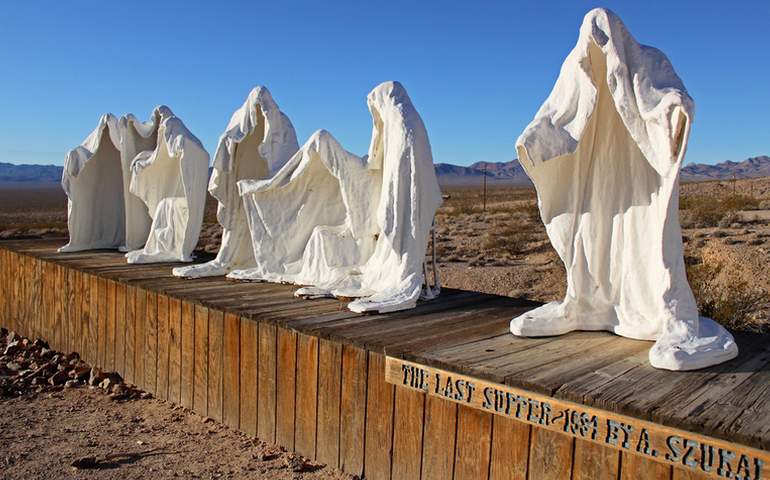
Just down the road lies the Goldwell Open Air Museum, a surreal outdoor sculpture park started in 1984 by Belgian artist Albert Szukalski. His haunting “The Last Supper” (life-size, ghostly figures in white robes) anchors the site, joined by works such as “Ghost Rider” and “Lady in the Desert.” Free and open 24/7, it’s a striking modern contrast to Rhyolite’s faded past—ideal for combining history with contemporary desert art. Website.
Rhyolite isn’t just ruins—it’s a reminder of how quickly luck can shift within the harsh desert. In a world of constant change, this ghost town endures, whispering tales of ambition and loss to every visitor who walks its silent streets. Pair it with a Death Valley loop for an unforgettable Nevada day trip: one part gold rush nostalgia, one part timeless wonder.