Visiting the Ward Charcoal Ovens Near Ely, Nevada
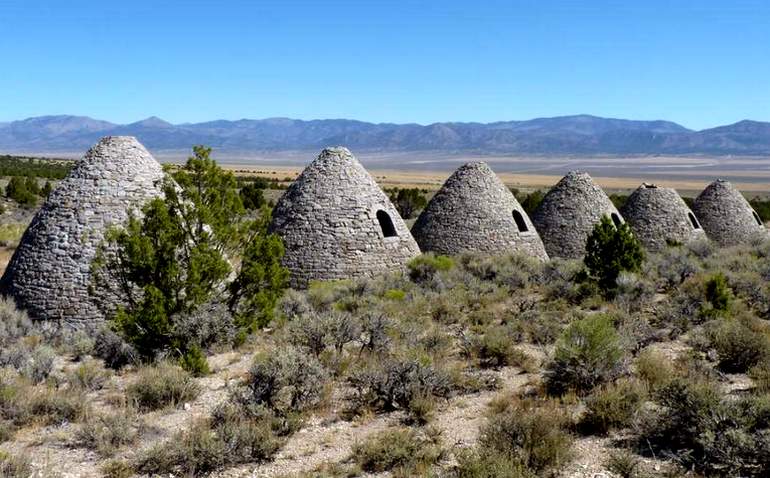
Six stone ovens stand in a high basin south of Ely, each one shaped like a giant beehive and still intact after a century and a half. Ward Charcoal Ovens State Historic Park protects Nevada’s best-preserved charcoal kilns, built in 1876 to feed the silver smelters of a boomtown that burned bright and went cold in a few short years. The park is small, quiet, and reached on a paved road, which makes it one of the more satisfying history stops on a Highway 50 or Great Basin day trip.
The ovens fired for only three years. What remains is the masonry, the pinyon-juniper hills that once supplied the wood, and a campground on a trout stream. Visitors can walk inside the kilns, hike short loops above Steptoe Valley, and stay the night under some of the darkest skies in the state.
Why the Beehive Ovens Were Built
Silver ore turned up in Willow Creek Basin in 1872, found by freighters looking for oxen grazing in the canyon. The Ward Mining District took shape about two miles north of the present park. Small claims worked the ground for a few years. In April 1875, the Martin and White Company of San Francisco bought claims and built smelters to melt the ore.
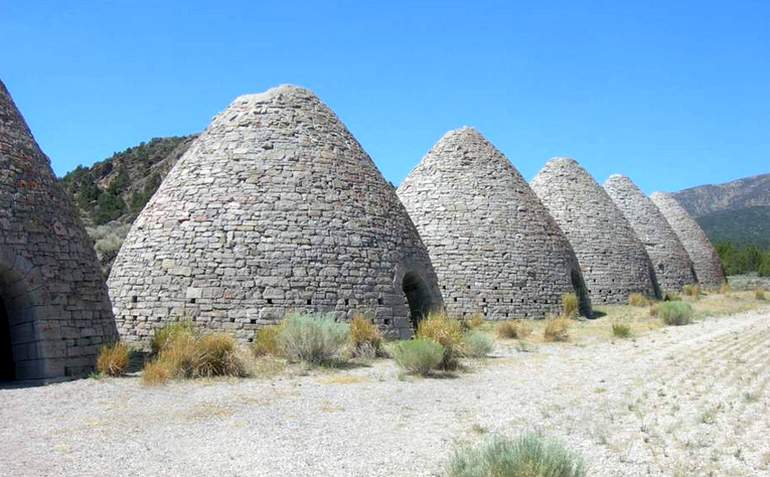
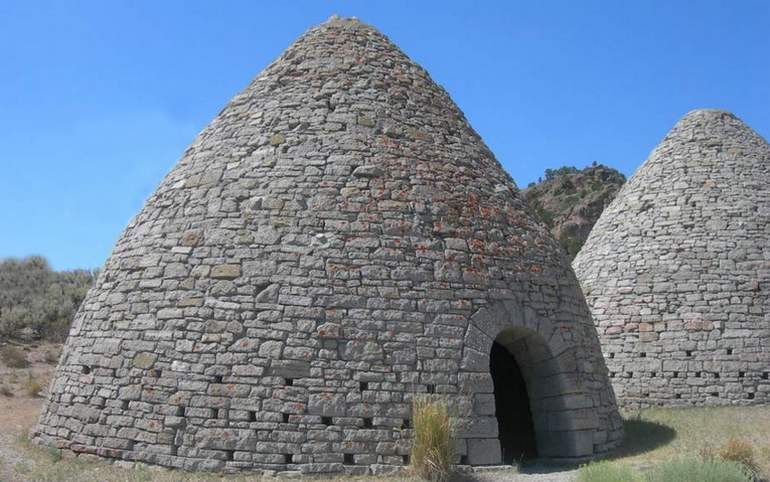
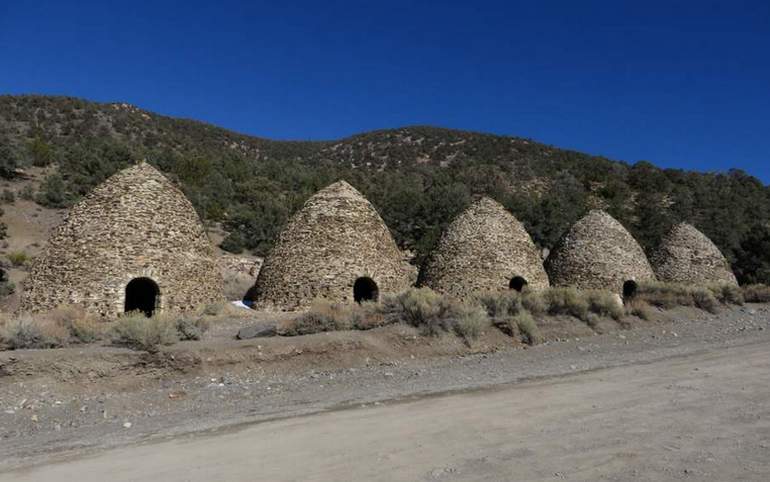
Wood alone could not hold the heat those furnaces needed. Charcoal could. In 1876, the company hired itinerant Swiss-Italian masons, specialists known as carbonari, to build six ovens in the basin. The beehive form came from an Italian charcoal tradition and replaced slower open-pit burning. Local volcanic rock, a light quartz latite welded tuff quarried from the nearby hills, went into walls about two feet thick at the base. Each oven stands about 30 feet high and 27 feet across.
Crews filled an oven with roughly 35 cords of pinyon pine and juniper, sealed the door, and let the wood smolder for about 12 days. A single firing could yield about 50 bushels of charcoal per cord. Smelters at Ward used 30 to 50 bushels to reduce one ton of ore. Each load stripped the trees from five or six acres. During the late 1870s, hills around eastern Nevada mining camps were cut bare for miles.
The Rise and Fall of Ward, Nevada
At its peak around 1877, Ward was one of White Pine County’s largest towns, with about 1,500 residents. It had two newspapers, including the White Pine News; a school; a fire department; hotels; saloons; a Wells Fargo office; two smelters; and a stamp mill. Nearly a million dollars in lead, silver, and copper ore came out of the district during the boom.
The ovens ran only from 1876 through 1879. Ore quality dropped, timber ran short, and the kilns went cold. Miners drifted toward the newer camp of Taylor, across Steptoe Valley. A fire in 1883 destroyed about a third of Ward. The post office closed in 1888. Brief revivals in the 1930s and 1960s never brought the town back. Repeated flash floods, on a low site, wiped out most of what was left. The town remnants sit on private land. A cemetery, along with smelter and mill foundations, is about all that marks the old streets. The ovens, two miles south, fared better.
After the smelters shut down, stockmen and prospectors used the kilns as shelter in bad weather. Local stories also cast them as a hideout for stagecoach bandits, and one tale has a family wintering inside an oven. The masonry stayed sound because the walls were thick and the stone was well laid. The site remained on ranch land until 1956, when the C.B. Land and Cattle Company of Ely gave the Nevada State Park Commission a special use permit to protect the ovens. In 1969, the state received 160 acres and created a historic monument.
Walking the Ovens and the Trails
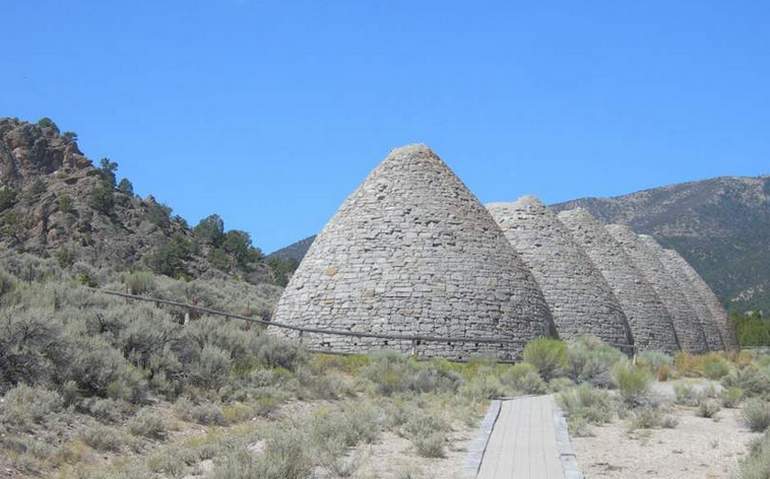
The six kilns sit in a loose row in the basin, and visitors can step inside. The interiors stay cool even on a hot afternoon, and the domed ceilings show how the draft was controlled from a vent at the top. Do not climb on the ovens. The stone is historic, and park rules prohibit climbing on it.
Elevation is about 7,050 feet, in the Egan Range. Summer afternoons often reach the upper 80s or low 90s, and nights cool off fast. Winter highs can sit in the 40s, with lows below freezing, and snow or mud can slow the drive in. Pinyon and juniper cover the slopes. Mule deer, elk, and grouse use the basin, along with rabbits, coyotes, foxes, and the occasional bobcat or mountain lion.
Short trails leave the oven area. An interpretive loop runs about 0.6 miles. The Overlook Loop is about 0.9 miles and offers views toward Steptoe Valley. Longer options include a ridgeline loop of about 1.6 miles and a riparian loop of about 2 miles. The Ward Legacy Trail, about 2.2 miles, is open to OHVs and connects to the Ward Mountain trail system and adjoining public land. Inside the park, OHVs must stay on designated roads and travel at 8 mph. Drones are not allowed. Mountain biking and, in winter, snowshoeing or cross-country skiing use the same paths when conditions allow.
Willow Creek is stocked with rainbow trout as needed. Brown and brook trout reproduce in the stream. A Nevada fishing license is required. Two day-use areas have covered tables, grills, and restrooms, which makes the park an easy picnic stop between Ely and the southern end of the Egan Range.
Camping at Willow Creek
Willow Creek Campground is open year-round and works for tents and RVs, with no hookups. Sites include a picnic table, fire ring, and grill. Two large pull-through spaces handle bigger rigs; one site is accessible, and a group area is available. Vault toilets sit near the center of the campground. Drinking water is typically on from about mid-May through September, and off in the cold months, so winter campers should bring their own. Check-in starts at 2 p.m., and check-out is 11 a.m. Stays are limited to 14 nights in 30 days. Reservations are available through Reserve Nevada and are not required.
Camping is $15 per vehicle per night for Nevada plates and $20 for out-of-state plates. Day use is $5 for Nevada vehicles and $10 for non-Nevada vehicles. Bicycles are $2. Ground fires belong in the metal rings only. Seasonal fire restrictions are common across Nevada State Parks in dry months, so check current rules before you haul firewood. Cell service is unreliable. On a clear night, the basin is dark enough for a serious look at the Milky Way.
Getting to Ward Charcoal Ovens
The park is in White Pine County, about 20 miles south of Ely, at 1696 Cave Valley Road. From Ely, drive south on U.S. Highways 6, 50, and 93 for roughly seven miles, then turn southwest onto Cave Valley Road and continue about 11 miles to the entrance. The road to the park is paved. The gate is open 24 hours a day, every day of the year, though winter storms can slow the last miles. The park phone is 775-289-1693.
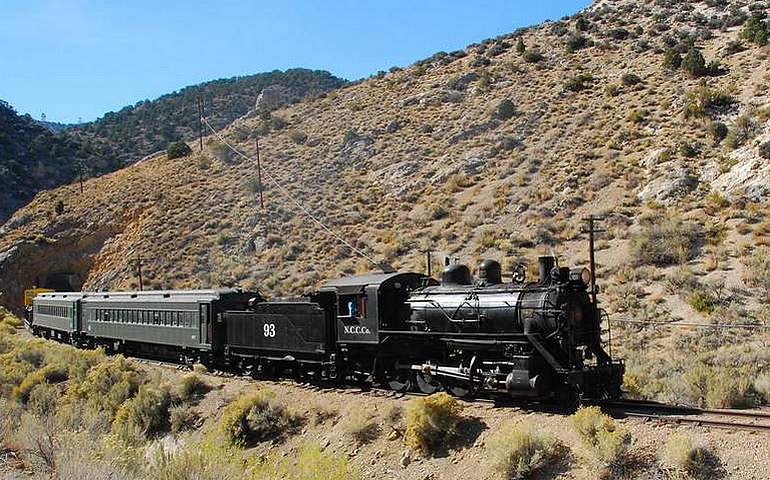
Ely is the practical base. Motels, RV parks, and casinos line the main streets, and the six-story Hotel Nevada is the landmark on Aultman Street. Restaurants offer steak, diner food, and Chinese food. If the ovens are the main stop, Ely also puts you close to the Nevada Northern Railway Museum, where the historic shops and excursion trains show how ore moved through this country. Great Basin National Park is about 60 miles east. Garnet Hill, a rockhounding spot, and Cave Lake State Park are an easy drive away. Ghost towns and mining camps dot the hills within about 30 miles of Ely.
Travelers who like charcoal kilns can compare these ovens with the Wildrose Charcoal Kilns in Death Valley and the Cottonwood Charcoal Kilns in Owens Valley. Ward’s six are larger and more finely built than most Nevada examples, and they are the easiest of the three to walk into on a casual day trip.
Ward Charcoal Ovens FAQ
Are the Ward Charcoal Ovens open year-round?
Yes. The park is open 24 hours a day, 365 days a year. Snow and mud can limit access in winter, and drinking water is typically available only from about mid-May through September. Park website.
How much does it cost to visit?
Day use is $5 per vehicle for Nevada plates and $10 for out-of-state vehicles. Camping at Willow Creek is $15 per night for Nevada vehicles and $20 for non-Nevada vehicles. Bicycle entry is $2. Confirm current fees at parks.nv.gov before you go.
Can you go inside the ovens?
Yes. Visitors can walk into the six kilns. Climbing on the structures is not allowed.
How far are the ovens from Ely?
About 20 miles south. Take U.S. 6/50/93 south from Ely for about seven miles, then Cave Valley Road southwest for about 11 miles. The road to the park is paved.
Is the old town of Ward open to visitors?
The townsite is on private land and was largely destroyed by fire and flash floods. The cemetery and a few foundations remain, but the ovens are the part of the district open to public visits.
Are the campsites suitable for RVs?
Yes, with limits. There are no hookups. Two large pull-through sites fit bigger rigs, and other sites work for tents and smaller trailers. Vault toilets are on site. Water is seasonal.
What else is nearby?
Ely, the Nevada Northern Railway Museum, Cave Lake State Park, Garnet Hill, and Great Basin National Park, about 60 miles east. Ghost towns are scattered within about 30 miles of Ely.
Discover more from Daytrippen.com
Subscribe to get the latest posts sent to your email.