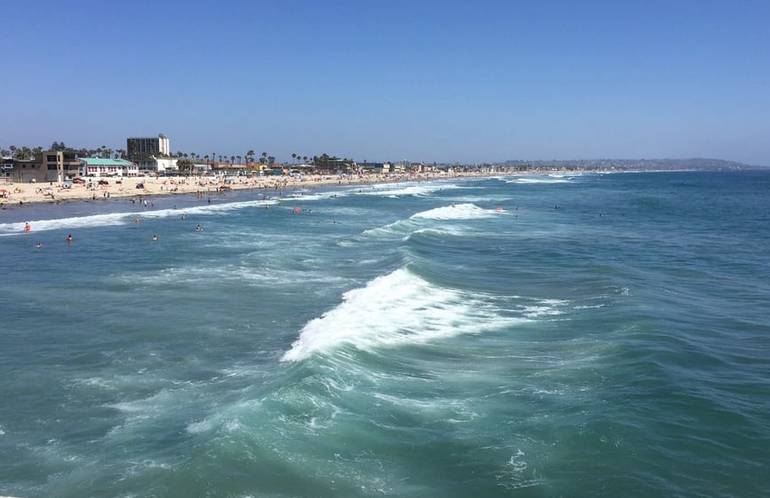
A Perfect Day in Mission Beach, San Diego
Mission Beach is a two-mile sandbar squeezed between the Pacific Ocean and Mission Bay, and it still feels more like an East Coast boardwalk town than a typical Southern California suburb. If Atlantic City or Coney Island is your idea of a good beach day — rides, a crowded walkway, cottages turned into rentals, and a little carnival energy — this is the San Diego stretch that comes closest.
The neighborhood developed later than Ocean Beach to the south and Pacific Beach to the north. Builders had to figure out how to put streets and houses on sand, so the official subdivision map did not land until 1914. A wooden bridge went in around the same time so cars and trolleys could reach the new lots from Ocean Beach. John D. Spreckels, the same name behind so much early San Diego infrastructure, then used an amusement center to sell real estate. That 1925 project became Belmont Park. Many of the original 1920s–1940s cottages remain, though most have been rebuilt as two-story homes or condos on tiny lots. Mission Beach is now one of the city’s most tightly packed residential communities, which is why the streets feel busy even on a quiet weekday.
A day trip works well here because almost everything sits within walking or biking distance: ocean on one side, calm bay on the other, and the amusement park at the south-central hinge of the boardwalk.
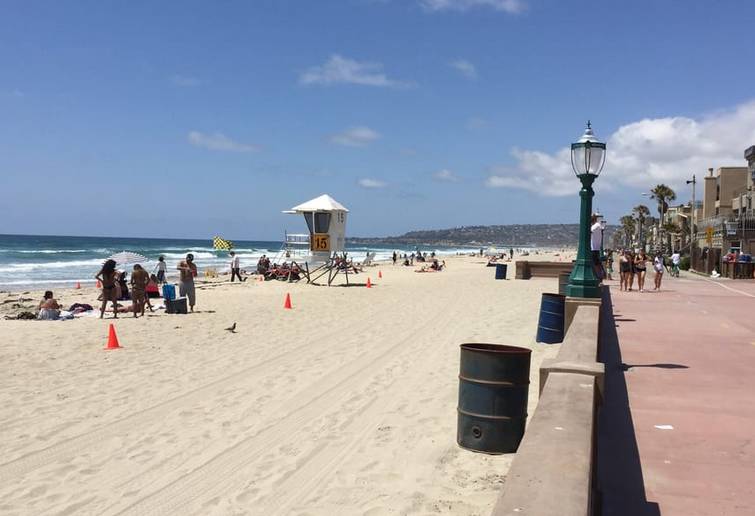
Walk or Bike the Mission Beach Boardwalk
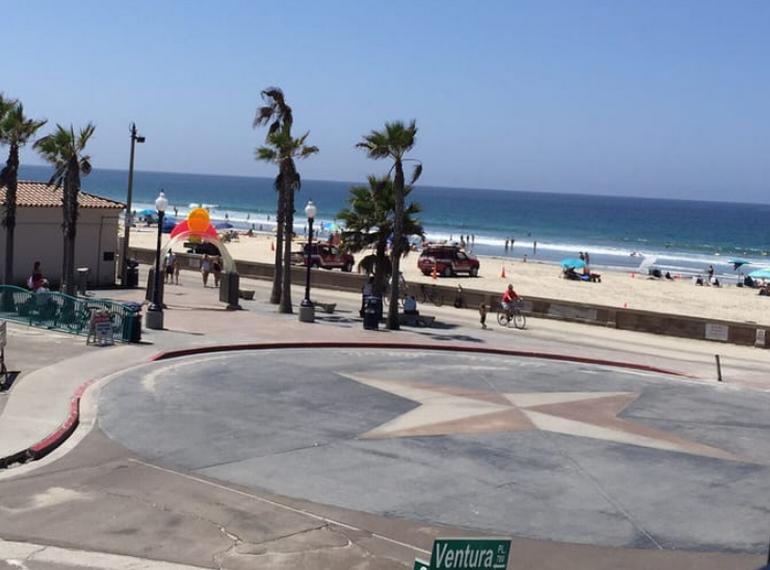
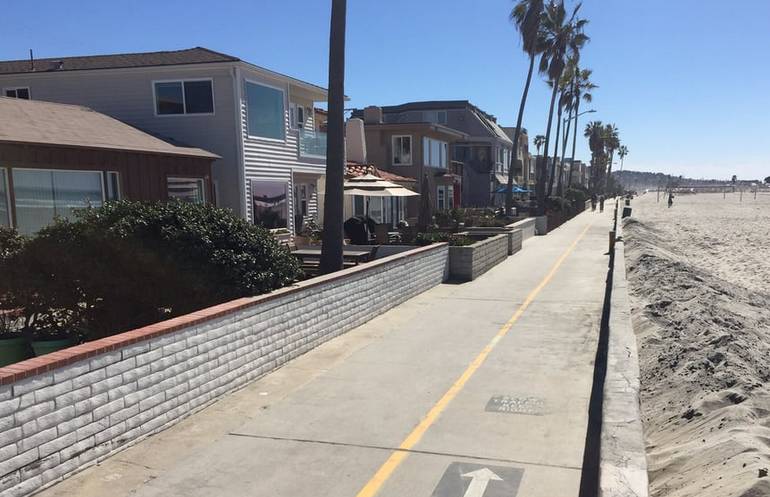
Ocean Front Walk runs about two miles along the water and is the neighborhood’s main stage. Cyclists, skateboarders, joggers, and people on rented cruisers share the path with strollers and visitors who are only there to watch. Mission Boulevard is the commercial spine one block inland. The two streets together give you the full picture: beach on the west, shops and vacation rentals in the middle, and Mission Bay parks to the east.
Rent a bike near Belmont Park if you want to cover both ends of the peninsula without fighting for parking twice. South Mission Beach is quieter and more local. North Mission Beach blends into Pacific Beach, where the boardwalk keeps going toward Crystal Pier. On a clear day, the horizon is all water and sky; on a busy Saturday it is more of a parade. Either version is part of the point.
The bay side is the easier place to get on the water. Mission Bay is a huge human-made aquatic park, so kayaks, paddleboards, and electric Duffy boats are common rentals if you want a break from salt spray and shore break.
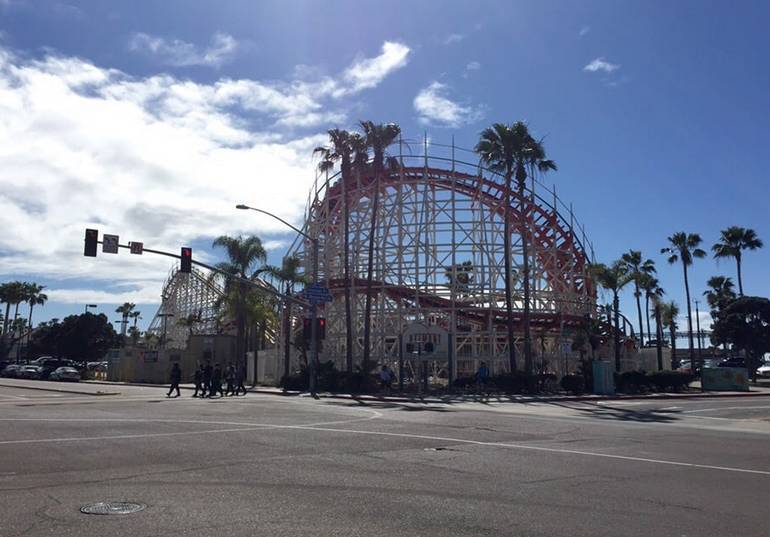
Ride the Giant Dipper at Belmont Park
Belmont Park sits at Mission Boulevard and West Mission Bay Drive, right where the boardwalk crowd is thickest. Spreckels opened it on July 4, 1925, as the Mission Beach Amusement Center, hoping the rides would pull buyers to those small lots. The park later closed, faced demolition talk in the 1970s, and survived because residents fought to keep the coaster. The Giant Dipper is now a National Historic Landmark.
The wooden coaster still delivers the original punch: about 2,600 feet of track, a 75-foot drop, and speeds near 48 mph. It is one of the last antique wooden coasters on the West Coast, and you can hear the trains from a block away. Park entry is free. You pay only for rides, the arcade, and add-ons such as the Flow Rider, Beach Blaster, Liberty Carousel, bumper cars, ropes and zip line, and other seasonal attractions. Hours shift with the season, so check Belmont Park before you go, especially on summer nights when the lights on the coaster are part of the view from the sand.
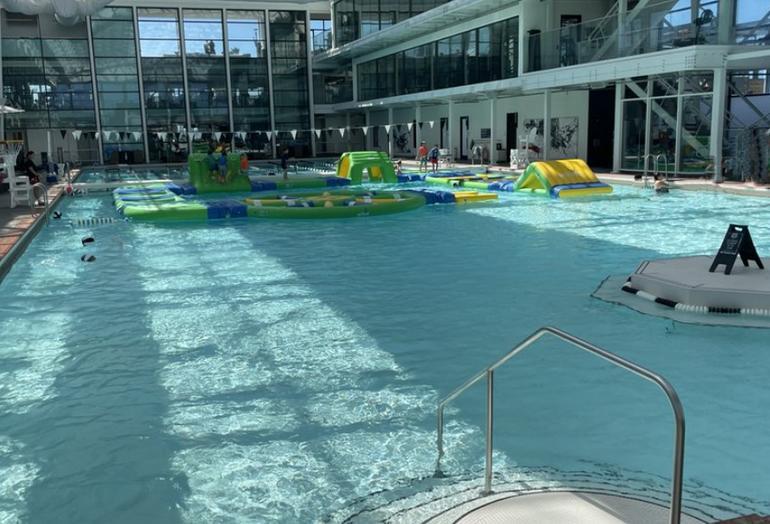
Cool Off at The Plunge
Architect Frank Walter Stevenson designed the indoor pool that opened with the amusement center in May 1925. First called the Natatorium, The Plunge measured 60 feet by 175 feet and held about 400,000 gallons. At opening, it was billed as the world’s largest saltwater pool. The water was later switched to freshwater after salt damaged the filtration system. Johnny Weissmuller and Esther Williams both swam here when Hollywood still used the building as a backdrop.
The pool closed in 2016 for a long renovation and reopened as a modern swim facility inside the historic Spanish Renaissance shell. Floor-to-ceiling glass and a retractable roof changed the feel without erasing the scale. Today you can buy a day pass or a membership for lap swim, recreational swim, and an inflatable obstacle course. Hours are generally early morning through early evening; recreational swim with the obstacle course usually starts later in the morning than member lap hours. Confirm current pricing and schedules before you pack a towel, because The Plunge is ticketed separately from the amusement rides.
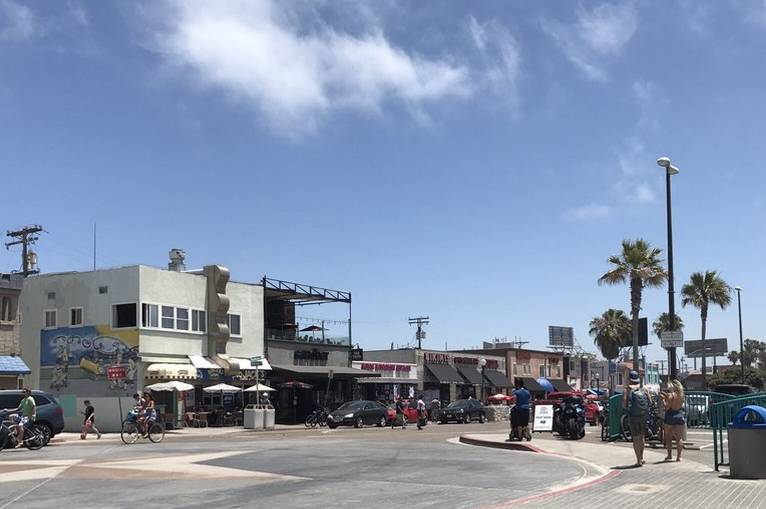
South Mission Beach, the Channel, and Wreck Alley
Keep walking south, and the boardwalk energy thins out. Anglers work the rocks near the channel while boats move between Mission Bay and the open ocean. This is a good place to sit, watch the harbor traffic, and let the day slow down.
On a bright afternoon, you may see shapes on the horizon. Those are not accidents. A few miles off Mission Beach, divers know the site as Wreck Alley: ships sunk on purpose to build an artificial reef. The standout is the HMCS Yukon, a 366-foot Canadian destroyer scuttled in 2000. Nearby are the Ruby E, a former Coast Guard cutter, and the El Rey, an old kelp harvester. The wrecks sit too far out for casual swimming, but they explain those silhouettes and why dive boats leave Mission Bay so often.
Two longtime Mission Boulevard bars, The Pennant and the Beachcomber, still draw a South Mission crowd after the sun drops.
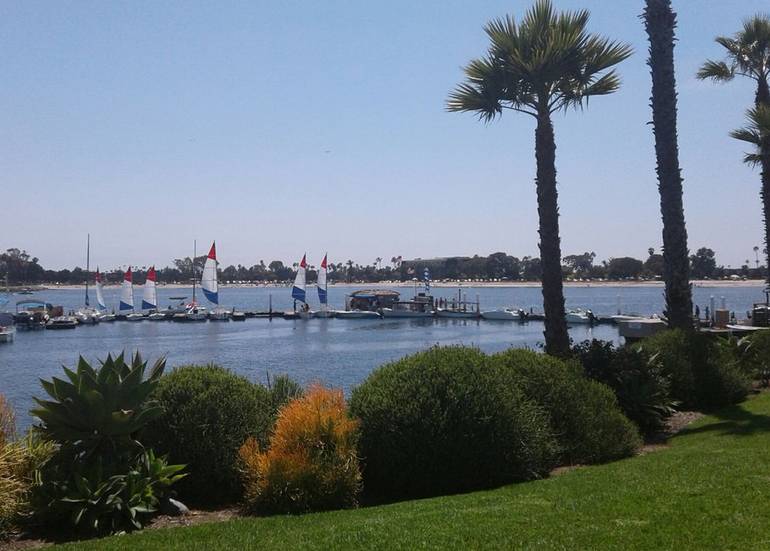
Cruise Mission Bay on the Bahia Belle
If you want the peninsula from the water, look at the Bahia Belle. This Mississippi-style sternwheeler runs seasonally from the Bahia Resort Hotel and the Catamaran Resort Hotel and Spa. You do not have to stay at either hotel to buy a ticket, though hotel guests often pay less.
The classic sightseeing loop is a short cruise around Mission Bay Park, with views back toward Mission Beach, the bay islands, and the resort shoreline. Schedules change by season and sometimes by day of the week. Summer often adds evening departures and special sailings. Reservations are the safe move on weekends. It is an easy add-on after Belmont Park and a calmer contrast to the oceanfront walk.
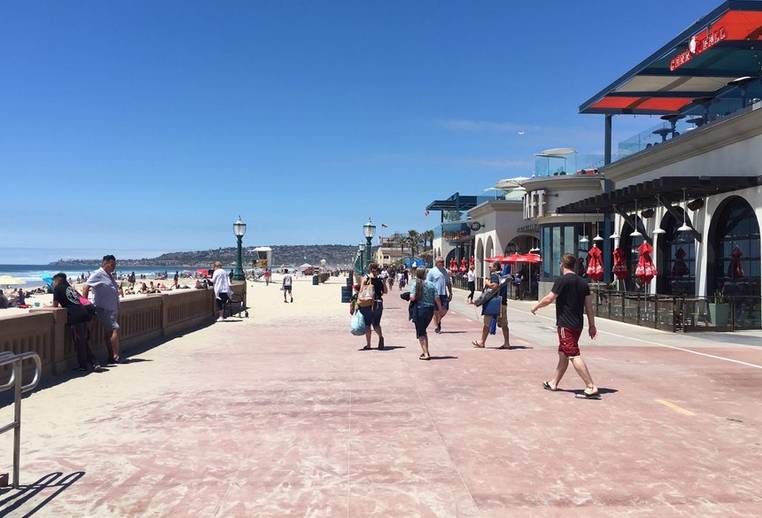
The Mission Beach Crowd and Everyday Scene
The mix on the boardwalk is part students from San Diego State and the University of San Diego, part families on vacation, part year-round residents who treat the walkway like a front yard. You will see vintage beach cruisers next to designer sunglasses, volleyball games in the sand, and surfers waiting on a modest break. The weather does a lot of the work. Even in winter, a clear afternoon can feel like a reason to cancel whatever else you had planned.
Celebrities have owned homes in the area, but you are more likely to notice the density: narrow courts, rooftop decks, and barely enough room between buildings for a surfboard. That tight layout is why Mission Beach feels social. Everyone ends up on the same two-mile path.
Where to Eat and Drink in Mission Beach
Sandbar Sports Bar and Grill: 718 Ventura Place, San Diego, CA 92109
Sandbar sits just off the sand with an upstairs deck, indoor seating, and outdoor tables that look toward Belmont Park. No reservations; it is first come, first served, and the wait grows on sunny weekends. The kitchen is known for fish tacos that have picked up local contest wins and plenty of repeat orders. Come for a late lunch if you want the view without the dinner crush.
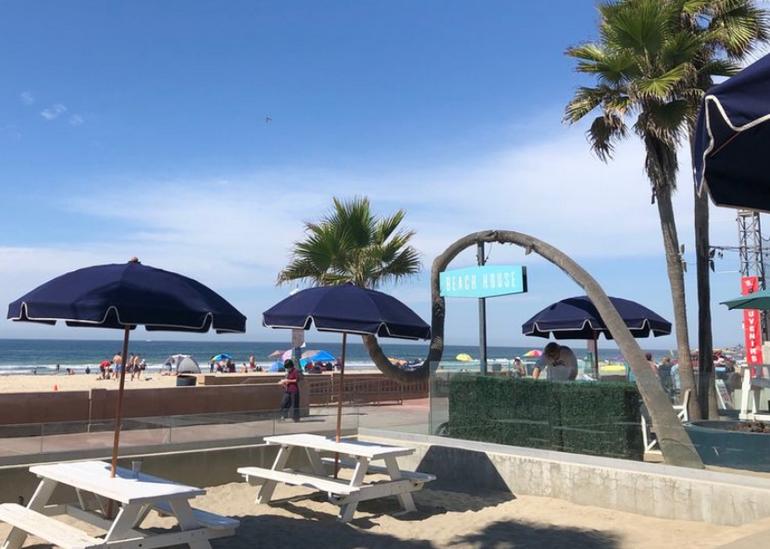
Beach House Tequila + Taqueria: 3125 Ocean Front Walk, San Diego, CA 92109
This one is on the boardwalk, which means people-watching is the main course. Umbrellas cover much of the patio, and the tables closest to the path fill first. Groups can reserve private cabanas. Weekends often bring live music. Stay for sunset if you can hold a table; the Pacific is right there.
South Mission adds The Pennant and the Beachcomber if you want a simpler bar stool after a long walk. Around Belmont Park, you will also find amusement-park food plus oceanfront spots such as Cannonball if you want a sit-down meal with a rooftop angle on the beach.
Parking and How to Get to Mission Beach
Parking is the hardest part of the day. Residents use most of the street spaces, many blocks are permit-only, and enforcement is consistent. Public lots around Belmont Park, Santa Clara Point, and South Mission Beach Park are your best starting points. Some lots are free with time limits; others near the park may charge, and rules change, so read the signs when you pull in.
Arrive before mid-morning on summer weekends, or you will circle. After you park, switch to walking or a rental bike. Driving from block to block rarely saves time and often costs you the spot you already had.
Mission Beach is about a 2.5-hour drive from Los Angeles in light traffic and about an hour and a half south of Orange County. From San Diego International Airport, it is a short hop compared with the coastal towns farther north.
Plan the Day, Then Let the Boardwalk Set the Pace
Park once, then walk or bike the oceanfront path. Ride the Giant Dipper if the line is short. Swim at The Plunge or drop into the ocean for a cooler reset. Eat on Ventura Place or Ocean Front Walk. If the season is right, finish on the Bahia Belle while the bay goes gold.
What makes Mission Beach worth the drive is how much history is still in use. The cottages became homes, the 1925 coaster still runs, and the indoor pool still holds a serious amount of water. Mission Beach was built to sell a summer escape. A century later, that is still what a good day here feels like: sand on both sides of a skinny peninsula, a wooden coaster over the boardwalk, and enough small streets to get lost in for a few hours before you head home.
Discover the Best San Diego Day Trips: Activities & Hidden Gems
Discover more from Daytrippen.com
Subscribe to get the latest posts sent to your email.